Plastic Pallet Box Selection Guide: Specs, Materials & Custom Options
Plastic Pallet Box Selection Guide: Specs, Materials & Custom Options
A pallet box datasheet is a compressed document. In a few lines it has to describe geometry, material, construction, intended applications and customization range, and the person reading it usually has to commit to a purchase order. The gap between a datasheet line and a working specification is where most sourcing errors begin.
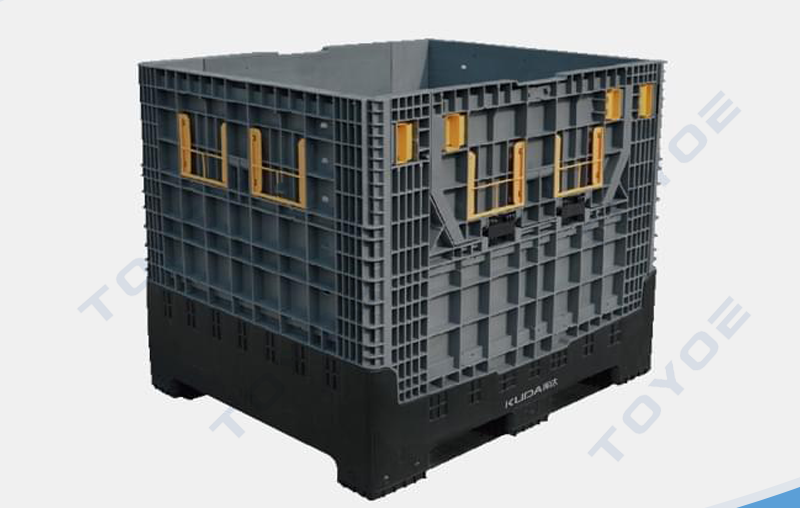
This guide reads the plastic pallet box range from TOYOE field by field. TOYOE is the brand of Zhangjiagang Fenghui Logistics Equipment Co., Ltd., a manufacturer established in 2010 in Suzhou, China, producing plastic pallet boxes, storage boxes, plastic crates and honeycomb panel boxes. The listed pallet box models include the 1200 x 800 x 1000 mm and 1000 x 800 x 800 mm sizes, both stated in the 100-200L capacity range, plus a 1230 x 830 x 1000 mm die-cast honeycomb board model. The method below applies to any supplier's sheet, but the examples come from these listings.
Why a Pallet Box Datasheet Is Harder to Read Than It Looks
The difficulty is not that pallet boxes are complex products. It is that one datasheet line carries several independent decisions at once, and the fields are not weighted equally.
A model code such as 1200*800*1000 looks like a name but is actually a geometry statement. A capacity figure such as 100-200L is a family-level range, not the usable volume of a specific configuration. A material field may read HDPE on one line and HDPE/PP on another within the same product family. A type field may say Enclosed, while a neighbouring field quietly describes the moulding process. None of these is a defect in the sheet; they are normal for an industrial container catalogue. The risk is that a buyer reads the model name, assumes the rest, and discovers the mismatch at sample stage or, worse, at goods receipt.
For a reader at the awareness and research stage, the useful discipline is to treat every field as either a decision or a confirmation. A decision is something the buyer can settle internally, such as footprint, stack height or empty-return method. A confirmation is something only the supplier can close, such as the load rating of a specific configuration or the internal clear dimension. Mixing the two is the most common cause of a wrong specification.
Where Plastic Pallet Boxes Sit in Industrial Logistics
Plastic pallet boxes are specified where a rigid, reusable container has to move parts between production, storage and transport without repacking at each step. The supplied product data describes the pallet box as a Storage Box-Plastic Pallet Box used in the logistics and packaging industry for automotive parts storage, with three stated roles: storing automotive parts, providing standardized stacking, and transportation protection.
The working conditions attached to those roles are more demanding than the product name suggests. The listed application environment includes high humidity, dust and a wide temperature range. A documented Mexico logistics project adds waterproof and anti-static environments, 24/7 operation, and supporting equipment such as forklifts, warehouse shelves and logistics handling equipment. The same project lists moisture-proof, shock-resistant and load-bearing-stable characteristics as requirements. In other words, a pallet box is selected against an operating envelope, not against a single property.
That envelope explains why the product family is broad. The listed industries are automobile manufacturing, precision electronics, food cold chain, home logistics, medical and health care, and heavy industry. The listed media are oil, industrial alcohol, alkali, acid, industrial wastewater, water and car parts. A container that has to sit in a dusty warehouse, be lifted by forklift and still protect a part during transport is being asked to do several jobs at once. TOYOE's export profile, with about 40% of products exported and Mexico and the USA as major markets, is a useful signal that the listings are written for cross-border logistics, where the datasheet also has to satisfy customs and transport documentation.
The Datasheet Fields That Decide Fit
Read the sheet in a fixed order: geometry first, then material and construction, then function, then customization, then commercial and logistics fields. Reading in this order prevents a customization discussion from starting before the basic fit is settled.
Model and dimension string
The model codes in this range are dimension-first. "1200*800*1000 Plastic Pallet Box" encodes length x width x height in millimetres, and "1000*800*800 Pallet Box" follows the same convention. The die-cast model is listed as "1230*830*1000 Pallet Box". The convention is practical, but it has one trap: the three numbers describe the outside envelope, not the internal clear space. If the load has a fixed dimension, the internal dimension has to be confirmed separately.
The footprint is the first real constraint. A 1200 x 800 mm base matches a common pallet format, which matters if the container will sit on existing pallets or in racking designed around that module. The 1000 x 800 mm base trades 200 mm of length for a narrower unit. Height is the second constraint: 1000 mm and 800 mm differ by 200 mm, which changes how many tiers fit under a rack beam or inside a trailer before the load becomes height-limited rather than weight-limited.
Capacity range
Capacity is stated as 100-200L across the family. A range is a specification boundary, not a measured value for every model. Before ordering, the buyer should ask which figure applies to the exact model and configuration being quoted, because the same nominal footprint can be built with different internal arrangements.
Material line
Material is where the sheet rewards careful reading. The 1200 x 800 x 1000 model is listed with HDPE and PP. The 1000 x 800 x 800 storage pallet box is listed with HDPE. The 1000 x 800 x 800 honeycomb panel box is listed with HDPE and PP. The 1230 x 830 x 1000 die-cast model is listed with HDPE. The material field is therefore model-specific within one family and should never be carried across from a neighbouring line.
Type and construction fields
Type is listed as Enclosed for the pallet box models. Some lines also carry process information in the type field: the 1000 x 800 x 800 honeycomb panel box is described as a blow-molded honeycomb board box, and the 1230 x 830 x 1000 model as a die-cast honeycomb board box. This matters because construction can affect how the wall, base and corners behave under load, and it explains why two containers with the same footprint can be different products.
Feature flags
The feature field reads recyclable, durable and nestable. These are functional claims rather than measurements. Nestable is the one with immediate logistics consequences, because it determines how empty containers behave in return transport. The other two describe intended service life and end-of-life handling; neither is a test result.
Customization fields
The customization fields are listed as Size: Customized, Color: Customized Color, Logo: Free Printing, Custom Order: Accept, Sample: Accept, and Specification: Multiple Specifications / Can be customized. Each is a permission, not a boundary. The sheet says customization is possible; it does not say how far each dimension can move.
Commercial and logistics fields
The remaining fields support the transaction rather than the product. Origin is Suzhou, China; the HS code is 3923100000; packing is plastic film; production capacity is 30,000 sets per year. For an importer, the HS code and origin drive duty and documentation. For a project buyer, the capacity figure is the first check against annual demand.
Reading the Two Standard Footprints
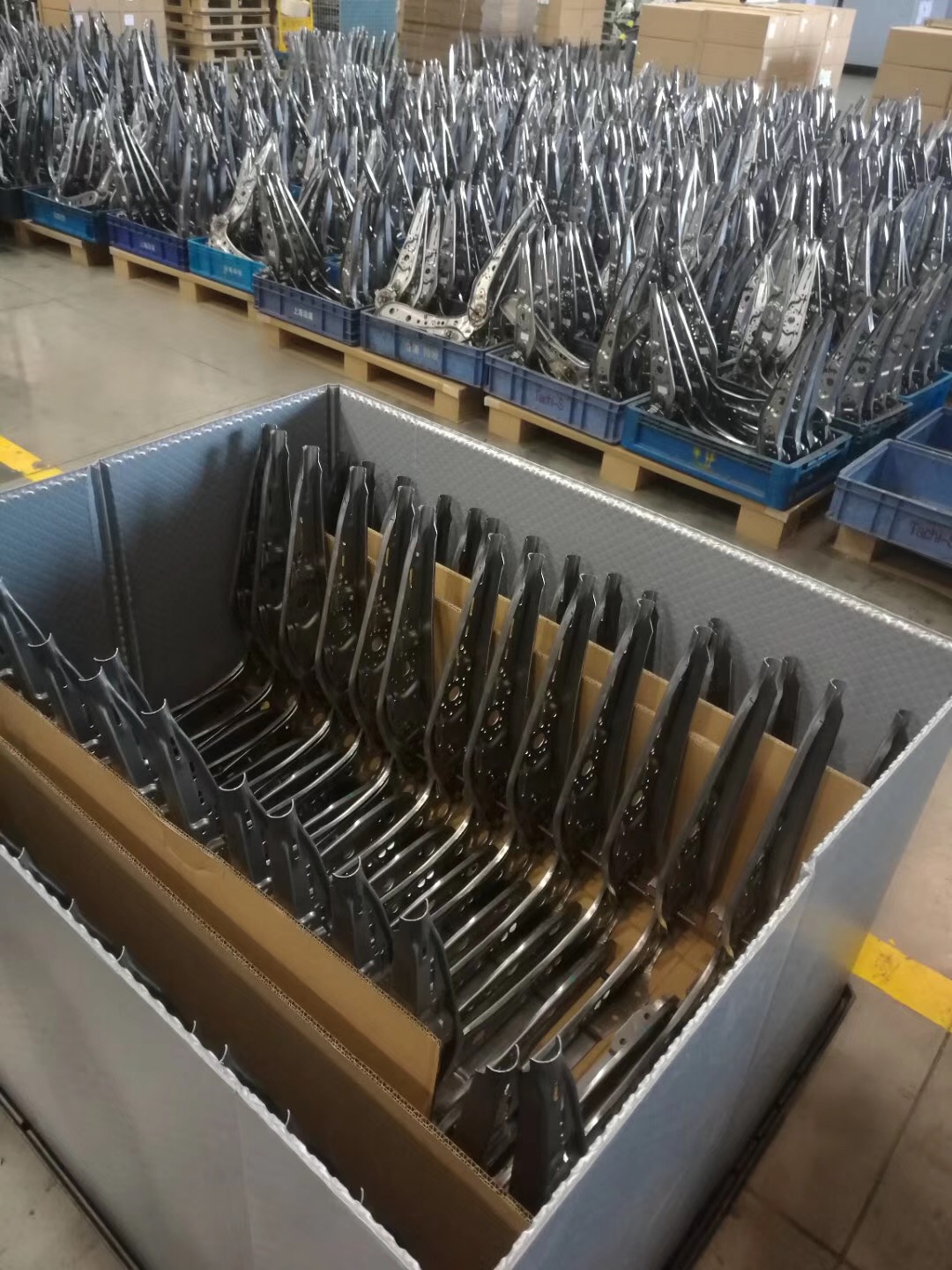
Placing 1200 x 800 x 1000 mm next to 1000 x 800 x 800 mm makes the difference look simple, and in geometry it is. Both share an 800 mm width and the same 100-200L capacity band. They differ by 200 mm in length and 200 mm in height.
What matters is how those two differences propagate. Length affects how many units fit across a rack bay, a trailer row or a staging lane. Height affects the number of tiers before a height limit is reached, and it also changes lift height and operator visibility during forklift handling. A buyer who compares only the capacity band will see two identical products; a buyer who compares the dimension string will see two different storage geometries.
There is a second trap in this pair. The 1000 x 800 x 800 size appears in more than one listing with different material and construction: an HDPE storage pallet box and an HDPE/PP honeycomb panel box. The same footprint is therefore not a guarantee of the same product. When a project standardizes on a footprint, it should also standardize on the material and construction line, or the two variants will be treated as interchangeable on the floor.
For projects that need a larger envelope, the 1230 x 830 x 1000 mm die-cast model extends beyond the 1200 x 800 mm base in both length and width. That changes pallet and rack compatibility and should be checked before the model is introduced into an existing fleet.
HDPE and HDPE+PP: What the Material Field Does and Does Not Tell You
The listings use two material formulations: HDPE alone, and HDPE with PP. The sheet does not state proportions, wall thickness or performance targets, so the material line should be read as a composition statement, not a performance verdict.
For the buyer, the practical consequence is narrower than it first appears. First, material is a per-model attribute, so a quotation for one line does not describe another. Second, the application media matter: oil, industrial alcohol, alkali, acid, industrial wastewater, water and car parts are all listed as applications, but chemical compatibility depends on concentration, temperature and contact time, none of which a catalogue line can settle. Third, if a project requires a specific material for a customer specification or an internal standard, that requirement belongs in the inquiry rather than in an assumption drawn from the family description.
This is also where a common sourcing shortcut fails. A buyer may see HDPE/PP on a summary page and assume every model in the range is a blend. The listings do not support that assumption: the 1000 x 800 x 800 storage pallet box line is HDPE only.
Enclosed Design, Load-Bearing and Nesting Behaviour
What enclosed changes
An enclosed pallet box contains the load within a closed body rather than an open frame. In the listed application environment of dust, high humidity, wide temperature range and transport handling, the practical benefit is that the load is shielded from the surroundings and from contact during stacking. The 24/7 operation pattern noted in the Mexico project also means the container is handled repeatedly, so exposed edges and open sides become a handling risk rather than a cosmetic detail.
The limitation is equally important. Enclosed is a construction description, not a sealing rating. The datasheet does not state an ingress protection level, so a buyer with a waterproof requirement should confirm the sealing arrangement rather than read enclosed as watertight.
Load-bearing has to be confirmed, not assumed
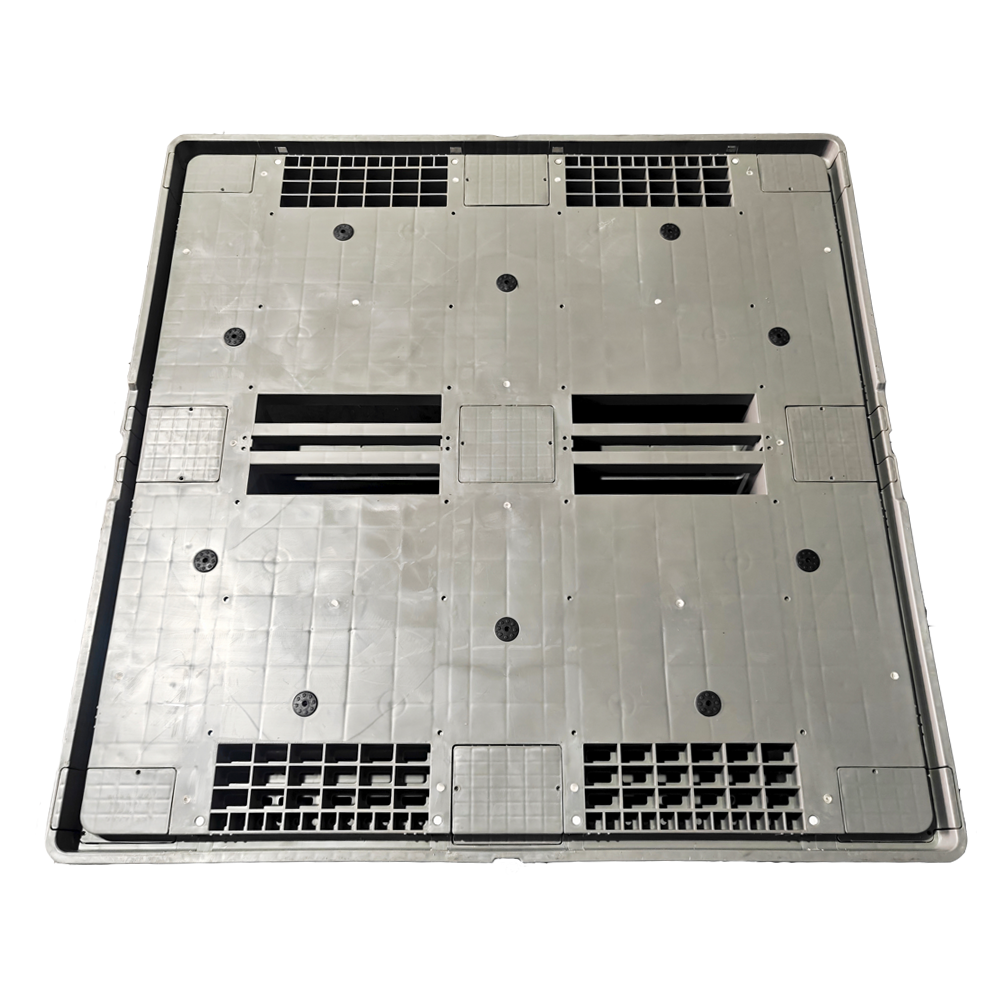
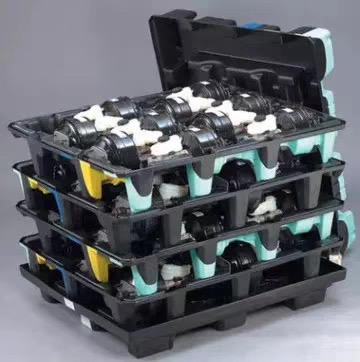
The datasheet supports the concept of load-bearing: the application notes require load-bearing stability, and the product images include a high-load-bearing assembly pallet box. What the sheet does not provide is a numeric load rating for each model. That is a confirmation item, not a decision item.
The practical route is to give the supplier three inputs: the weight of one loaded box, the number of tiers in the stack, and the storage duration. Ask for a load confirmation for the exact configuration. Static rack storage and dynamic forklift handling are different duty cycles, and a rating that suits one may not suit the other. A sample stack test at the intended stack height is the lowest-cost way to close this gap before a volume order.
Nesting and empty-return economics
Nestable construction means empty boxes can be nested into one another, reducing the volume of the return leg. In a closed-loop project this matters directly, because the return leg is frequently the least efficient part of a container fleet, and nesting addresses it without changing the loaded footprint.
Nesting should not be confused with folding. One commercial market report on pallet boxes describes foldable designs reaching a fold ratio of up to 5:1, but that figure applies to folding designs, not to the nestable models listed here. If empty-return volume is the dominant cost, the right question is whether a folding variant exists for the required footprint, not whether the nestable model can match a folding ratio.
ESD requirements
Where the load is electronic or the project specifies an anti-static environment, the datasheet alone is not enough. The relevant external reference is ANSI/ESD S541-2019, which applies to packaging used to store, transport and protect ESD-susceptible items, and conductive polymer blends are specified with surface resistance within 10⁴–10¹⁰ Ω. A standard HDPE or HDPE/PP pallet box listing does not by itself confirm ESD performance, so an ESD requirement should be raised as a separate specification with its own evidence.
Customization: Dimension, Logo, Color and Material
The customization fields are broad by design: size customized, color customized, free logo printing, custom orders accepted, samples accepted, and multiple specifications available. The buying task is to convert those permissions into a controlled change list before production.
- Dimension. A customized size changes the footprint or height, which can affect pallet compatibility, rack fit and stack height. Ask for the proposed external and internal dimensions in writing.
- Color. Customized color is a visual and identification feature. If color is used for part or line identification, a physical sample is more reliable than a screen reference.
- Logo. Free printing is listed as available. The change list should record the artwork file, the print position, the size and the number of print surfaces.
- Material. Where the project needs a specific formulation, state it in the inquiry. The catalogue lists HDPE and HDPE/PP across models, so the requested material should be tied to the exact model.
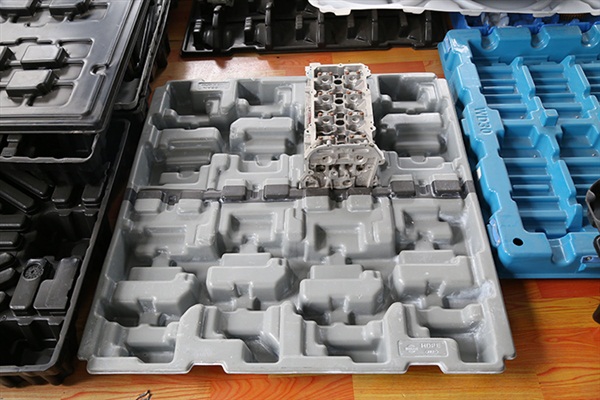
- Internal fitment. The product images show vacuum-formed inner lining trays, including booster, heavy-duty, transmission blister and anti-static blister variants. If the load needs locating or separation, the inner lining is a separate design item and should be specified with the part drawing.
Two customization risks deserve a check. The first is drift between an approved sample and the production batch: once a sample is approved, the approved dimensions, color and print should be recorded as the acceptance reference. The second is a customization that quietly changes the logistics envelope, such as a taller body that no longer fits the existing rack beam.
Step-by-Step: Specifying a Model from a Datasheet
- Start from the working condition. Write down the load, the handling equipment, the storage environment and the transport route before opening the catalogue. The Mexico project pattern is a useful template: high humidity, dust, wide temperature range, 24/7 operation, forklift and rack handling, moisture-proof and shock-resistant requirements.
- Read the dimension string as length x width x height. Match the footprint to pallets, racking and vehicle rows, then check the height against the available clear space. Do not infer internal dimensions from the model code.
- Confirm capacity for the exact model. Treat 100-200L as a family range and ask which value applies to the quoted configuration.
- Read the material line per model. Record whether the quoted line is HDPE or HDPE/PP, and do not carry the answer across from a different line in the same family.
- Confirm the type and any sealing requirement. Enclosed construction suits dust and handling protection; a watertight requirement needs a separate confirmation.
- Close the load-bearing question with data. Provide load weight, stack tiers and storage duration, ask for a configuration-specific confirmation, and verify it with a sample stack test.
- Decide the empty-return method. Choose nesting or folding on return-volume economics, and keep the 5:1 fold-ratio figure attached to folding designs only.
- Convert customization into a change list. Record dimensions, color reference, logo artwork and position, material, and any inner lining.
- Check the commercial and logistics fields. Confirm origin, HS code 3923100000, packing method and production capacity against the project volume and schedule.
Acceptance Checkpoints Before a Volume Order
A sample is the cheapest acceptance test available, and the datasheet states that samples are accepted. The sample should be checked against the same list used for specification: external dimensions, internal clear space, material line, wall and base condition, nesting behaviour, print position and inner lining fit.
Three commercial items should be closed in writing before the first volume order, because the datasheet does not fix them: the minimum order quantity per model, the production lead time against the project schedule, and the inspection sampling plan for the batch. These are normal confirmation items in industrial packaging procurement and should be recorded in the purchase order rather than left in the quotation.
The logistics fields are the last checkpoint. Origin Suzhou, China and HS code 3923100000 belong on the customs documentation. Packing is listed as plastic film, which should be checked against any customer-specific packing requirement. Production capacity of 30,000 sets per year is the reference point for a volume commitment; if project demand is a large share of that figure, the schedule should be discussed early.
Export experience is a useful secondary signal. About 40% of TOYOE's products are exported, with Mexico and the USA as major markets, which indicates that the export documentation and packing routine has been used for those destinations.
Use Cases That Fit the Listed Specifications
The listed applications fall into three groups, and each group stresses a different datasheet field.
Automotive parts. The primary listed use is automotive parts storage with standardized stacking and transportation protection. Here the dimension string and the load-bearing confirmation matter most, because parts are often heavy relative to their volume and the stack height is fixed by the rack.
Fluids and process media. Oil, industrial alcohol, alkali, acid, industrial wastewater and water are listed applications. For these, the material line and the compatibility confirmation carry the risk, and an enclosed body supports containment during handling. Compatibility should still be confirmed for the actual medium, concentration and temperature.
Dusty and humid environments. The listed working condition includes high humidity, dust and a wide temperature range, with moisture-proof and shock-resistant requirements. Enclosed construction and nestable empty handling are the relevant features here, together with the 24/7 handling pattern noted in the Mexico project.
The listed industry coverage, from automobile manufacturing and precision electronics to food cold chain, home logistics, medical and health care and heavy industry, is broad enough that the same model may be quoted into very different duty cycles. That is another reason to specify from the working condition rather than from the product family name.
Model Comparison
The table below uses only the fields stated in the supplied product data. Values that are not stated are left out rather than estimated.
| Model | Dimensions (mm) | Material listed | Type | Capacity | Construction note | Features |
|---|---|---|---|---|---|---|
| 1200*800*1000 Plastic Pallet Box | 1200 x 800 x 1000 | HDPE and PP | Enclosed | 100-200L | Plastic honeycomb panel box | Recyclable, durable, nestable |
| 1000*800*800 Storage Pallet Box | 1000 x 800 x 800 | HDPE | Enclosed | 100-200L | Storage box-plastic pallet box | Recyclable, durable, nestable |
| 1000*800*800 Plastic Honeycomb Panel Box | 1000 x 800 x 800 | HDPE and PP | Enclosed | 100-200L | Blow-molded honeycomb board box | Recyclable, durable, nestable |
| 1230*830*1000 Die-Cast Pallet Box | 1230 x 830 x 1000 | HDPE | Enclosed | 100-200L | Die-cast honeycomb board box | Recyclable, durable, nestable |
FAQ
What is a plastic pallet box in this product range?
It is a Storage Box-Plastic Pallet Box made of HDPE or HDPE and PP, supplied in an enclosed type with a 100-200L capacity range. The listed models include the 1200 x 800 x 1000 mm and 1000 x 800 x 800 mm pallet boxes and a 1230 x 830 x 1000 mm die-cast honeycomb board box. The boxes are described as recyclable, durable and nestable, and are intended for applications including oil, industrial alcohol, alkali, acid, industrial wastewater, water and car parts.
What is the difference between the 1200 x 800 x 1000 mm and 1000 x 800 x 800 mm models?
Both share an 800 mm width and the same 100-200L capacity range. The 1200 x 800 x 1000 mm model is 200 mm longer and 200 mm taller than the 1000 x 800 x 800 mm model. The longer model is listed with HDPE and PP, while the 1000 x 800 x 800 size appears in more than one listing with different material and construction, including an HDPE storage pallet box and an HDPE/PP honeycomb panel box.
What does enclosed type mean on the datasheet?
Enclosed describes a closed-body construction rather than an open frame. It is listed as the type for the pallet box models and supports load containment in dusty, humid and transport-handling environments. It is not a sealing rating; the datasheet does not state an ingress protection level, so a watertight requirement needs separate confirmation.
Which materials are listed, and why does the material line matter?
The listings use HDPE and, on some models, HDPE with PP. Material is model-specific: the 1200 x 800 x 1000 mm model and the 1000 x 800 x 800 mm honeycomb panel box list HDPE and PP, while the 1000 x 800 x 800 mm storage pallet box and the 1230 x 830 x 1000 mm die-cast model list HDPE. The datasheet does not state proportions or performance targets, so material should be confirmed per quoted model.
What customization options are listed?
The datasheet lists Size: Customized, Color: Customized Color, Logo: Free Printing, Custom Order: Accept, Sample: Accept and Specification: Multiple Specifications / Can be customized. These are permissions rather than boundaries, so the exact dimensional range, color reference, logo artwork and position, and material should be recorded in writing before production.
Which industries and applications are these pallet boxes intended for?
The listed industries are automobile manufacturing, precision electronics, food cold chain, home logistics, medical and health care, and heavy industry. The listed applications are oil, industrial alcohol, alkali, acid, industrial wastewater, water and car parts. The primary logistics use is automotive parts storage with standardized stacking and transportation protection.
How should load-bearing and nesting be verified before ordering?
The datasheet states load-bearing stability as an application requirement and lists nesting as a feature, but it does not give a numeric load rating per model. A buyer should provide the loaded weight, the number of stack tiers and the storage duration, request a configuration-specific load confirmation, and verify the result with a sample stack test. Nesting reduces empty-return volume; it should not be compared with the fold ratio of folding designs.
What commercial and logistics information should be checked?
Origin is Suzhou, China, and the HS code is 3923100000. Packing is listed as plastic film, and production capacity is 30,000 sets per year. The datasheet does not state minimum order quantity, production lead time or inspection sampling, so these should be confirmed in the quotation and recorded in the purchase order.
How can a buyer request a sample or a quotation for a specific model?
Samples are accepted according to the datasheet. Requests can be sent to zjgfh@zjgfenghui.cn, by phone at 86-15370396661, or by WhatsApp at +86-19901499028, specifying the model, the material line and the customization items required. A product brochure is available for download.
Conclusion
A pallet box datasheet is not a specification by itself. It becomes one when the buyer separates internal decisions from supplier confirmations and resolves each field in a fixed order: dimension string, capacity for the exact configuration, material line per model, type and sealing limits, load-bearing evidence, nesting or folding for the return leg, customization change list, and the commercial fields that govern documentation and delivery.
For the TOYOE range, the records that most often need closing before a volume order are the internal clear dimension behind the 1200 x 800 x 1000 mm and 1000 x 800 x 800 mm model codes, the load rating of the specified configuration, the material line for the exact model, and the customization boundaries behind the broad customization permissions. Each of these can be settled with one sample and one written confirmation.
Next step. To evaluate a specific model, request a sample or a quotation from TOYOE (Zhangjiagang Fenghui Logistics Equipment Co., Ltd.) at zjgfh@zjgfenghui.cn, by phone at 86-15370396661, or by WhatsApp at +86-19901499028. Include the model, the material line, the loaded weight, the stack tiers and the customization items in the request.
Have Questions or Need More Details?
Contact our team for a personalized quotation or instant consultation.
Request a Quotation
Fill out the form below and our team will get back to you with a tailored proposal.
WhatsApp Direct Chat
Prefer to chat in real-time? Message us on WhatsApp for instant assistance & quick answers.
- Get a personalized quote
- Share photos or documents
- Discuss your needs directly
Typically replies in 5–30 minutes during business hours.