Pallet Boxes in Chemical & Wastewater Storage: A Heavy-Industry Guide
A pallet box for oil, industrial alcohol, alkali, acid, industrial wastewater or water is selected by matching four project variables — the medium, the containment requirement, the handling footprint and the empty-container return loop — before size, colour or price are discussed. Get that order wrong and a site ends up with a container that fits the aisle but not the rack, or that holds the load but cannot be nested when empty.
This guide applies that sequence to the three TOYOE models specified for fluid and chemical applications: the 1200×800×1000 pallet box, the 1000×800×800 pallet box and the die-cast 1230×830×1000 pallet box. TOYOE is the brand of Zhangjiagang Fenghui Logistics Equipment Co., Ltd., a Suzhou, China manufacturer founded in 2010 that produces plastic pallet boxes, storage boxes, plastic crates and honeycomb panel boxes, with a stated capacity of 30,000 units per year, roughly 40% of output exported, and Mexico and the USA listed as main markets.
Two boundaries run through everything below. Every product statement comes from the supplied specification: 100–200L listed capacity, HDPE/PP material, enclosed and nestable construction, customization of size, colour, logo and material, a one-unit minimum order, 7–15 day customized lead time, and a five-year guarantee that excludes human error and excessive storage weight. And where the specification is silent — per-medium chemical resistance, liquid tightness, numeric load ratings, ESD surface resistance — this guide says so instead of filling the gap with assumption.
Why Chemical and Wastewater Storage Fails Before the Box Does
Most fluid-storage problems in heavy industry are specification failures rather than container failures, and they repeat in five recognisable patterns.
- Containment is assumed, not defined. "Enclosed" describes a closed body with no open grid or cage side. It is not a statement that the container is a sealed liquid vessel, and a project that needs secondary containment has to design it explicitly.
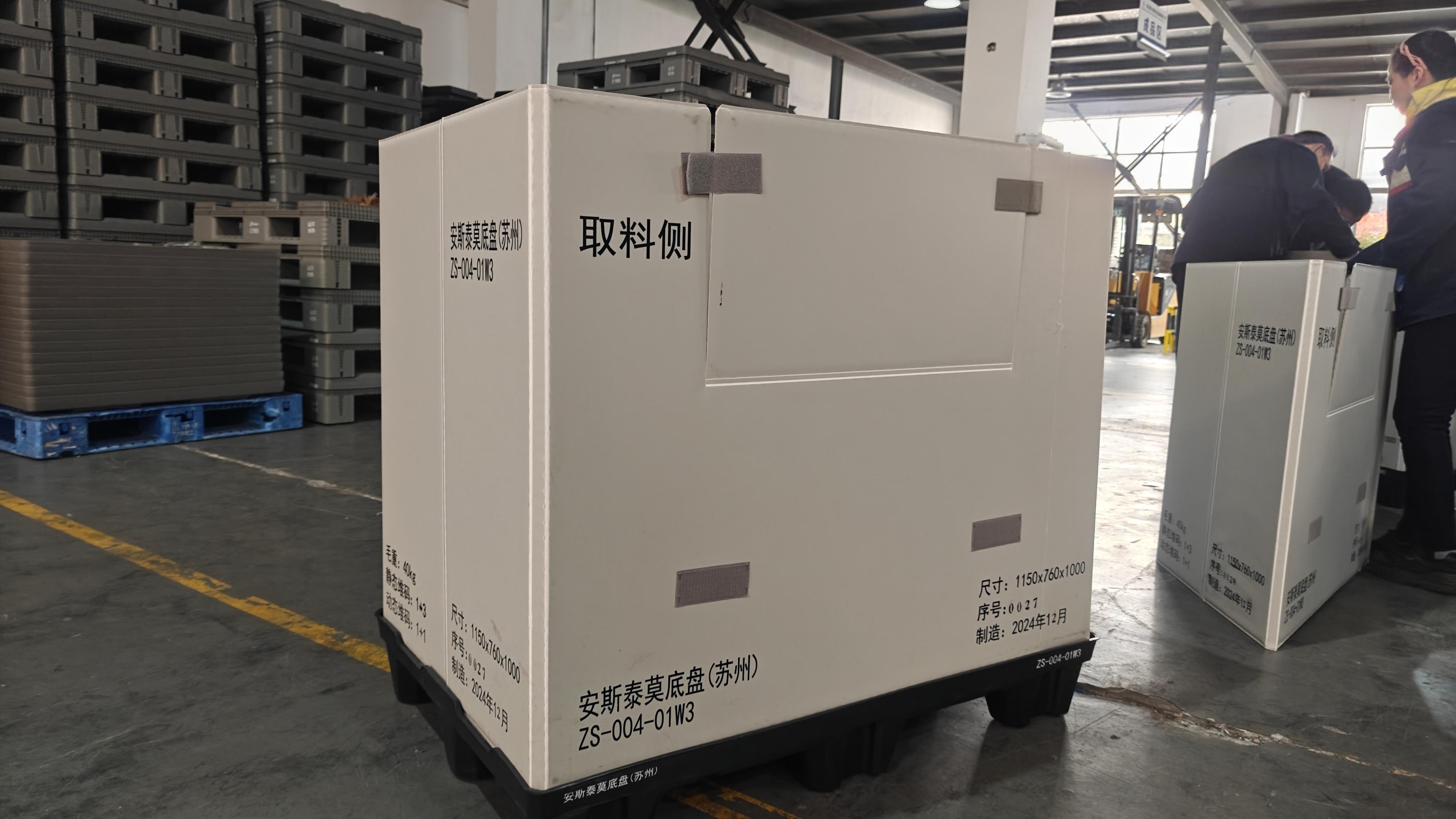
- The footprint is chosen from a catalogue photo. 1200×800, 1000×800 and 1230×830 millimetre bases are different handling envelopes. A box picked from a picture can miss a rack bay by 30 mm and be rejected at commissioning.
- Handling damage is not budgeted for. Forklift tines, shelf rails and stacking tolerances all contact the body. Anti-slip base design and structural stability matter far more in a 24/7 operation than in a showroom demonstration.
- The empty return loop is ignored. Fluid containers spend much of their life empty. If they do not nest, the volume used by empties can exceed the volume used by loaded boxes.
- Identification breaks down. Similar-looking boxes holding alkali, acid and wastewater become a labelling problem long before they become a materials problem.
Each pattern maps to one specification decision, and the rest of this guide follows that mapping: requirements, construction, model choice, medium matching, process and verification.
What Heavy-Industry Fluid Storage Demands From a Pallet Box
A pallet box sits between the drum and the bulk tank in the storage hierarchy: a rigid, pallet-footprint container that a forklift can move, that a rack can hold and that a plant can reuse across shifts. Published sizing of the category is inconsistent because research houses define "pallet box" differently — one commercial source values the global pallet box market at USD 2.19 billion in 2024 and forecasts USD 3.02 billion by 2032, while another reports USD 12.76 billion for 2024 rising to USD 23.40 billion by 2033 at a 6.9% CAGR, with the divergence attributed to whether crates and bulk containers are counted. Neither number is a procurement benchmark; treat category statistics as scope-dependent and keep them out of the selection decision.
What does translate into a specification is the demand set that a heavy-industry site places on the container:
- Enclosed body: a closed wall configuration that keeps dust and splash light out of the load and shields contents from impact.
- Resin choice: HDPE or PP, with the final choice tied to the medium, its concentration and the temperature rather than to a general preference.
- Footprint compatibility: the base must match the plant's pallet standard, rack beam spacing, forklift openings and door widths.
- Stacking behaviour: a base and rim that behave predictably at the stack height the warehouse actually uses, not only at demonstration height.
- Nesting when empty: volume reduction for the return and buffer-storage leg.
- Cleanability and marking: surfaces that can be cleaned between media, plus a permanent way to identify contents.
- End-of-life route: a single-material polyolefin body that is recyclable where collection infrastructure exists.
How Enclosed HDPE/PP Construction Meets Those Demands
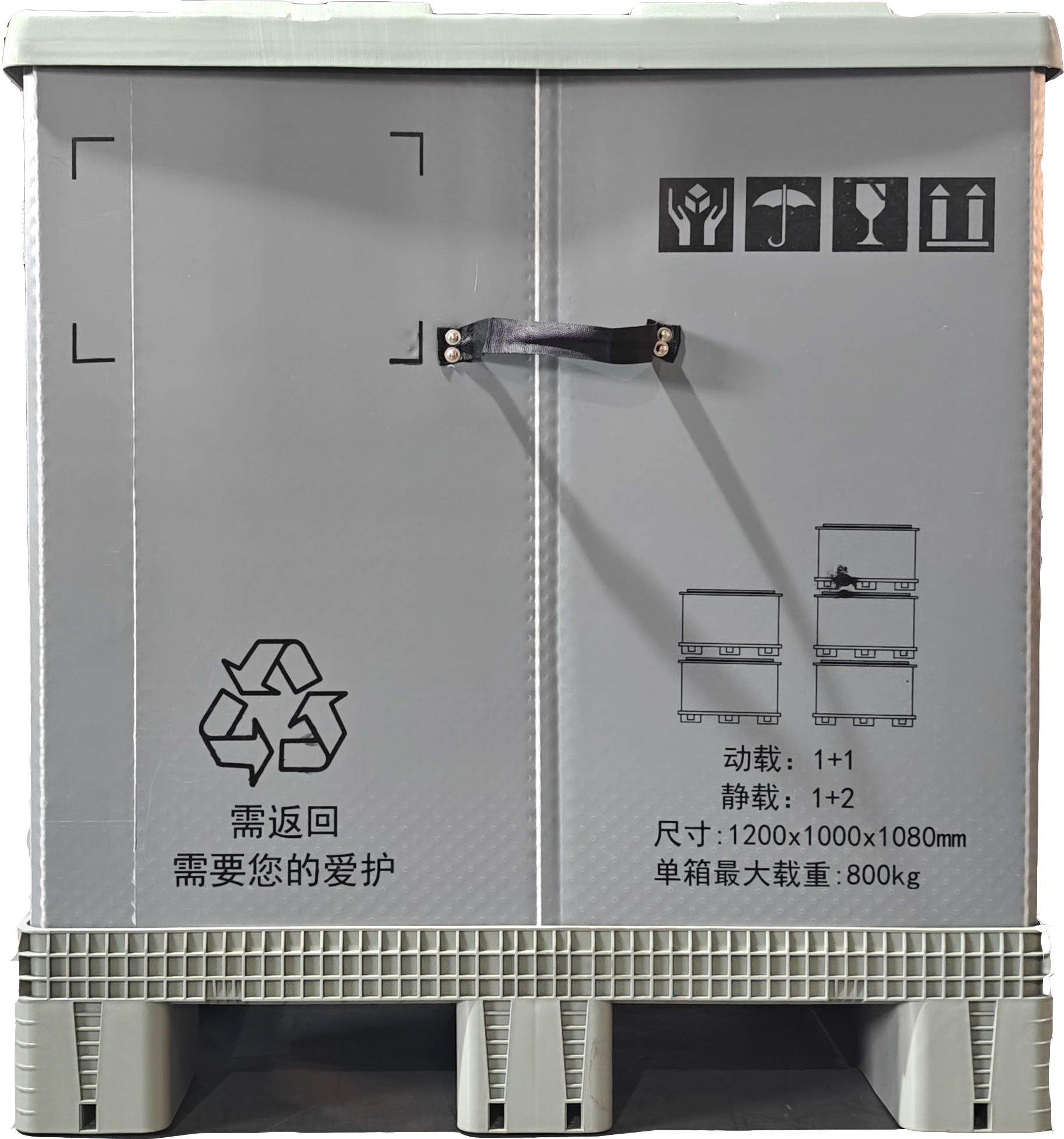
The supplied specification describes an enclosed industrial plastic box in HDPE/PP that is nestable, recyclable and durable, offered in multiple specifications with customizable size, colour, logo and material through OEM/ODM production. Read against the demand list, each feature answers a specific site problem rather than acting as a slogan.
Enclosed construction is what separates these boxes from open-grid or wire-cage alternatives. In a chemical or wastewater storage area, a closed body limits dust ingress, retains small items that would fall through a grid, and presents a continuous surface to the aisle and to adjacent stacks. What it does not do is define sealing: no liquid-tightness, gasket or vent specification appears in the supplied data, so a project that requires a sealed vessel needs a separate containment design and written confirmation of the intended fill method.
HDPE and PP are the two polyolefins named in the specification. Both are widely used for industrial chemical containers because they are tough and moisture-resistant; which one suits a given medium depends on concentration, temperature and exposure time, and that must be confirmed rather than inferred from the material name alone.
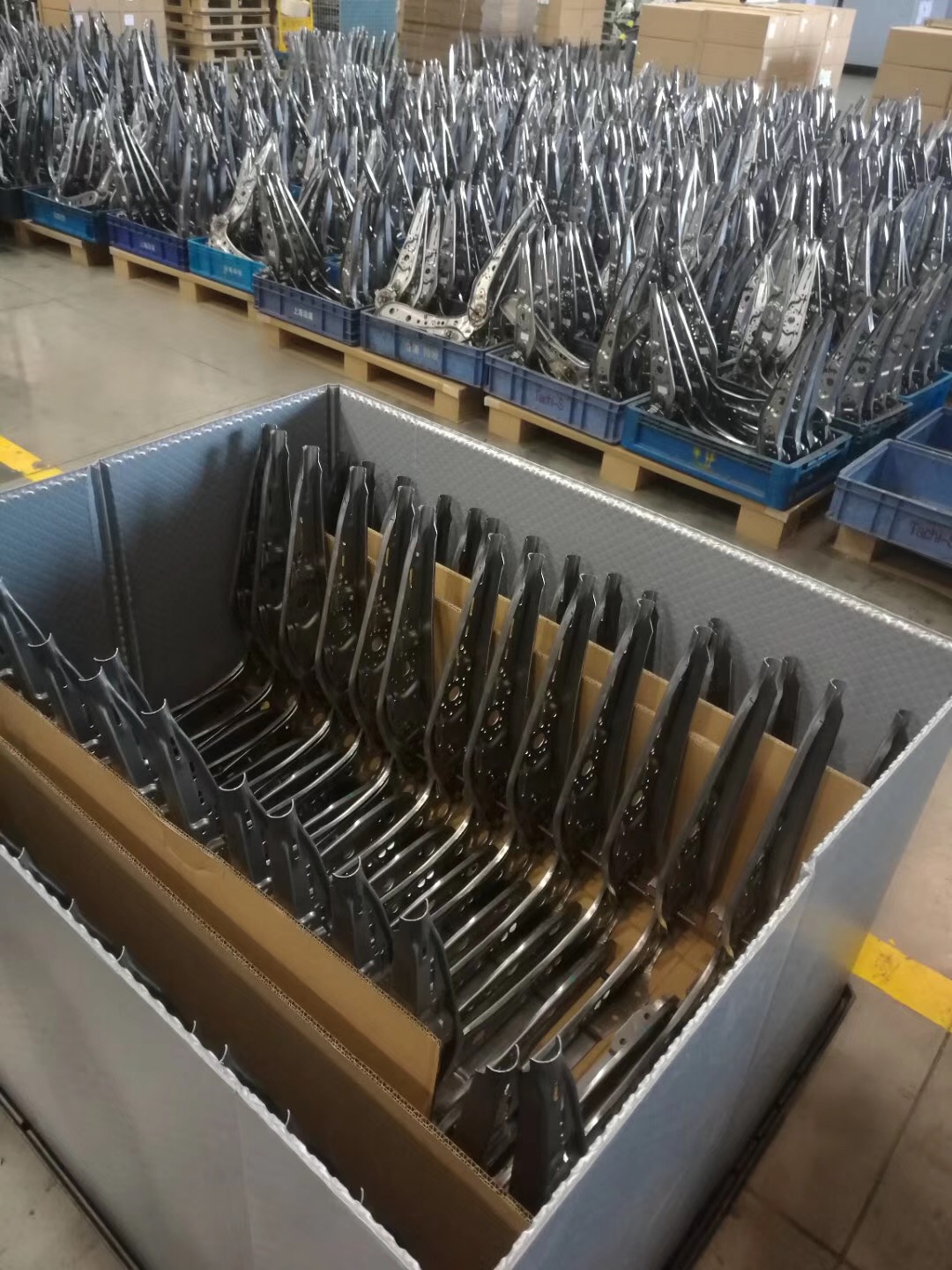
Nesting is a logistics feature, not a chemical one. Empty boxes nest to reduce return and buffer volume, which matters on a site running 24/7 with empties stored near the filling point. It is worth separating nesting from folding: third-party research cites fold ratios of up to 5:1 for foldable pallet boxes, while the supplied specification uses nestable rather than foldable, so those fold figures should not be transferred to these models.
Recyclability follows from the single-material polyolefin body. The practical recycling route still depends on local collection, contamination and the site's waste contract, so recyclability is a design property rather than a guaranteed disposal outcome.
Customization covers size, colour, logo and material, with colour and logo printing listed as free. Those are the cheapest identification tools available and should be used deliberately: a plant storing alkali, acid and wastewater in the same hall can code by colour and printed marking instead of relying on paper labels that humidity and cleaning will destroy.
The Three Models and Where Each Fits
Three TOYOE models carry the oil, industrial alcohol, alkali, acid, industrial wastewater, water and car-parts applications listed in the catalogue. They differ mainly in base footprint and wall construction, and those differences are what a project team has to match.
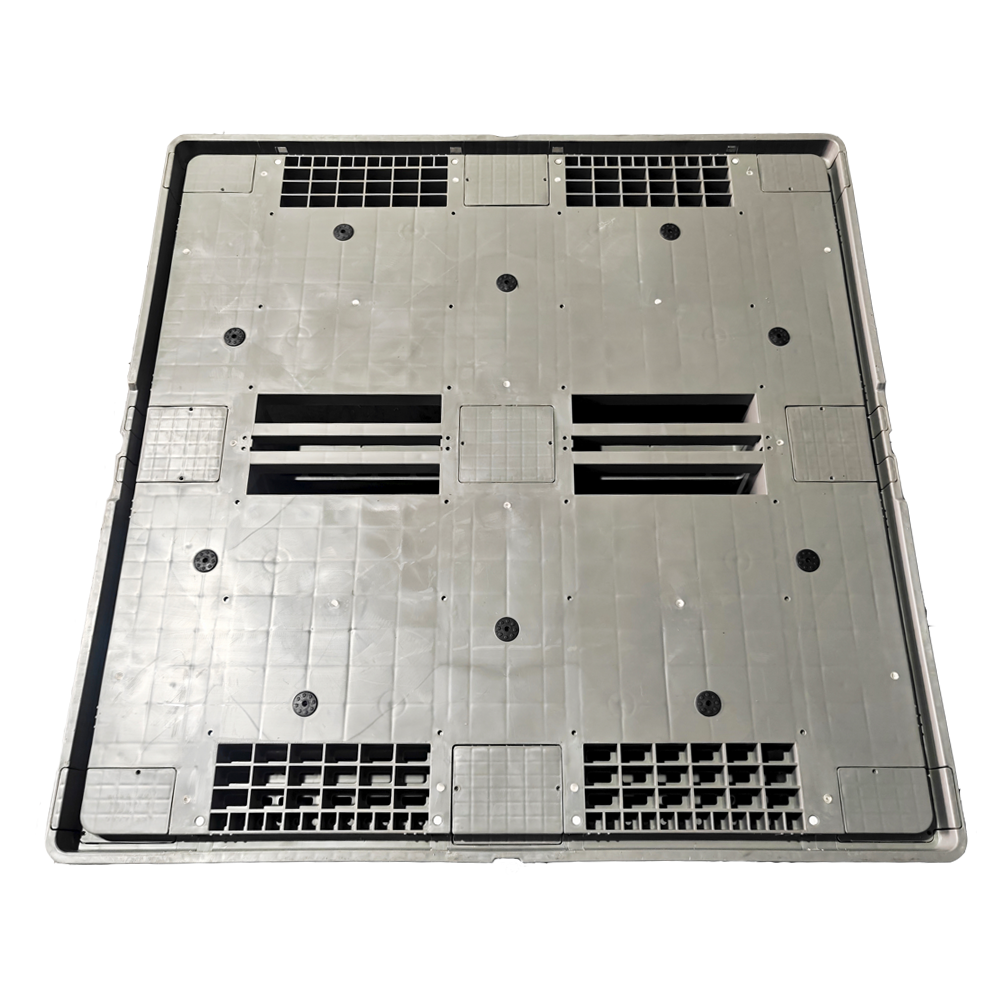
1200×800×1000 pallet box. The standard 1200×800 footprint at 1000 mm height, catalogued within the plastic honeycomb panel box family with PP and HDPE both named as materials. It is the default choice when the site already runs a 1200×800 pallet standard and racking is set to that module, because it needs no change to beam spacing or forklift practice. The taller body gives more vertical room per footprint, which suits stacks of smaller sealed containers, absorbents or part-and-fluid kits better than a single large vessel.
1000×800×800 pallet box. A smaller, lower footprint for aisles, shelves and doorways where the 1200 mm dimension is the constraint. It is listed in two constructions on the same base: a storage pallet box in HDPE, and a plastic honeycomb panel box in HDPE/PP with a blow-moulded honeycomb board body. That is a genuine specification fork rather than a naming detail — the two versions share a footprint but not a wall construction, so an inquiry should state which one the project requires.
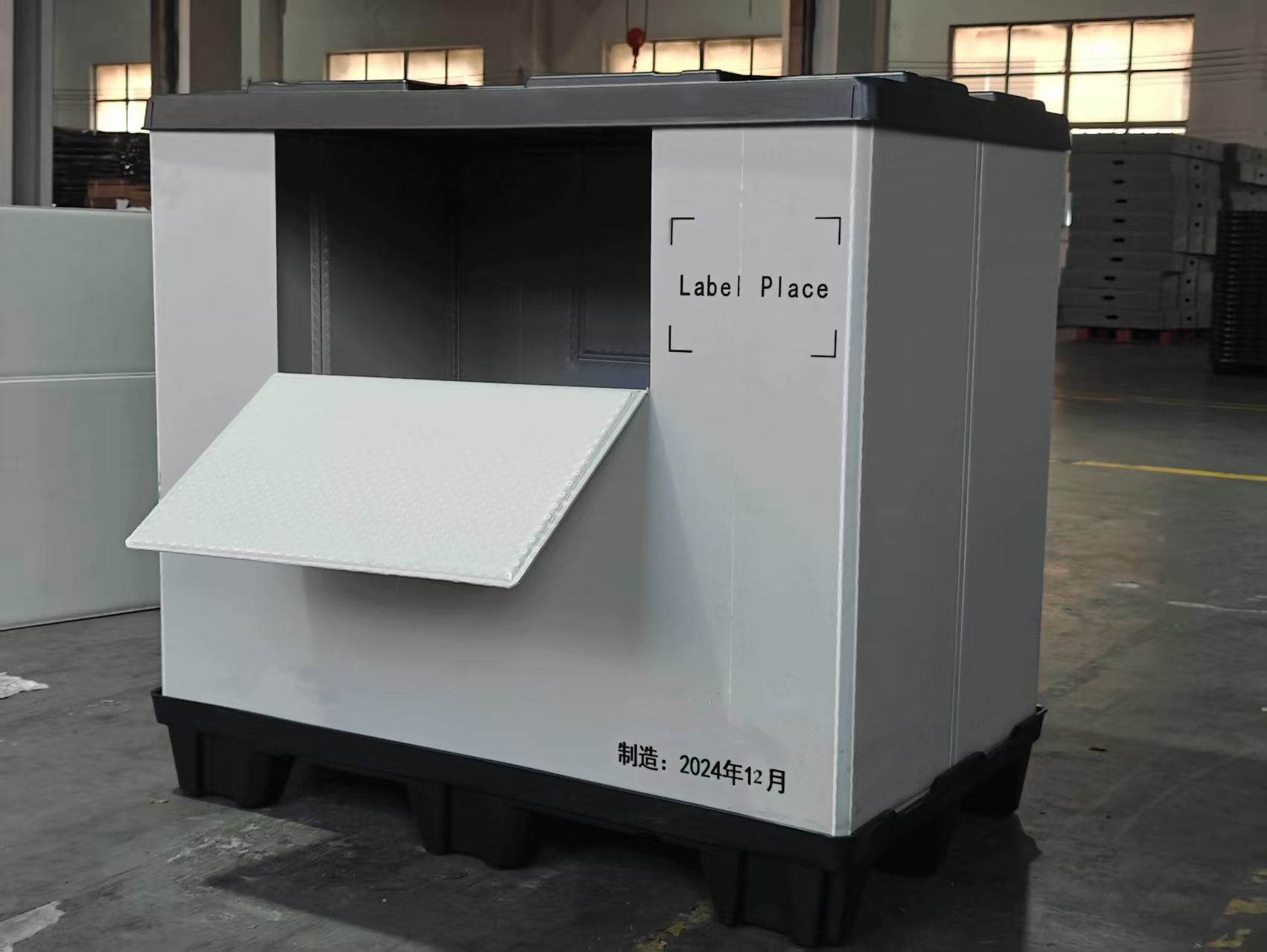
Die-cast 1230×830×1000 pallet box. The largest base of the three, catalogued as a die-cast honeycomb board box in HDPE and named in the product list for automotive engine applications. It becomes relevant where the 1200×800 module leaves no handling clearance, or where the load shape needs the additional 30 mm on each side. Because 1230×830 is not a standard pallet footprint, rack and forklift compatibility should be confirmed before a site standardises on it.
All three share the same listed capacity range of 100–200L, enclosed type, customized size, customized colour, free logo printing, HS Code 3923100000 and Suzhou origin. None of the supplied specifications includes a numeric load rating or a per-medium chemical-resistance table.
Model Comparison at a Glance
The table compares only attributes present in the supplied product records. Where a cell is repeated, it is because the records state the same value for each model.
| Attribute | 1200×800×1000 | 1000×800×800 | Die-cast 1230×830×1000 |
|---|---|---|---|
| Base footprint | 1200×800 mm | 1000×800 mm | 1230×830 mm |
| Catalogue construction | Plastic honeycomb panel box family | Storage pallet box, or honeycomb panel box (two versions) | Die-cast honeycomb board box |
| Material named | PP and HDPE | HDPE; HDPE/PP for the honeycomb version | HDPE |
| Listed capacity | 100–200L | 100–200L | 100–200L |
| Type / nesting | Enclosed, nestable | Enclosed, nestable | Enclosed, nestable |
| Customization | Size, colour, logo, material | Size, colour, logo, material | Size, colour, logo, material |
| HS Code | 3923100000 | 3923100000 | 3923100000 |
| Typical fit (editorial) | Plants already standardised on the 1200×800 pallet module | Aisles, shelves or doors where 1200 mm is the constraint | Projects needing a larger base and handling clearance |
Matching the Box to the Medium: Oil, Alcohol, Alkali, Acid, Wastewater, Water
The catalogue lists oil, industrial alcohol, alkali, acid, industrial wastewater and water as applications for these models. That list defines intended application scope. It is not a compatibility chart, because the supplied data contains no concentration limits, temperature limits, permeation data or exposure-time guidance for any of the six media. Compatibility therefore remains a project verification step, and the notes below concern what to specify and record — not what the resin is guaranteed to resist.
Oil. Viscosity and residue drive the design more than chemical aggressiveness does. Specify how the box will be filled and emptied, whether free liquid can pool in the corners, and how it will be cleaned between batches; oily film on a polyolefin surface is a slip and handling issue as much as a containment one. Put the oil type and operating temperature in the request.
Industrial alcohol. Evaporation and static are the two issues that change a specification. Ask how the fill point is vented, whether containers are earthed during filling, and whether a static-dissipative version is available, since ordinary polyolefins are not automatically dissipative. Record the alcohol grade and the expected exposure time.
Alkali. Concentration and temperature are the variables to state, because both change how a polyolefin behaves over months rather than hours. Plan secondary containment on the assumption that a filled box may be overfilled or struck, and confirm the cleaning method for caustic residue before the first batch.
Acid. Usually the most demanding of the six on a heavy-industry site. Verify the resin choice against the specific acid, its concentration and temperature; check that no metal hardware or rack rail in the storage area is exposed to splash; and keep bunding under the storage position rather than under the box alone.
Industrial wastewater. Composition is variable by definition and can change between batches. The practical answer is batch discipline: segregation, printed identification on the box, a cleaning step between incompatible batches, and a written record of what each container last held.
Water. Rinse water, condensate and stored process water need cleaning and stagnation control more than chemical resistance. Specify drainage and drying between uses, and include the drying step in the operator procedure rather than leaving it informal.
For all six, the request should carry the medium name, concentration or range, temperature range, fill and empty method, cleaning method, required containment level and any labelling standard the site already uses.
Step-by-Step: Specifying a Pallet Box for a Fluid Storage Project
The sequence below keeps decisions in the order that avoids rework at commissioning.
- Define the medium envelope. Name the substance, concentration, temperature range and maximum exposure time. One specification per medium family is safer than one box intended for "chemicals" in general.
- Set the containment requirement. Decide whether the box is the primary container, or whether it holds smaller sealed containers and needs no liquid containment at all, and state the secondary containment arrangement.
- Fix the footprint. Measure the rack bay, forklift opening and aisle before selecting. Choose 1200×800×1000 where the 1200×800 module is already standard, 1000×800×800 where 1200 mm is the constraint, and 1230×830×1000 only after confirming a non-standard base is acceptable.
- Choose the wall construction. Where the 1000×800×800 base is correct, decide between the storage pallet box version and the honeycomb panel version, and name that choice in the inquiry.
- Plan stacking and handling. Set the stack height the site will actually use, confirm forklift access at that height, and specify the base and anti-slip requirements together with the handling equipment.
- Design the return loop. Count how many empty boxes the site must hold, and confirm how much space the nested configuration releases.
- Specify identification. Use customized colour and free logo printing for medium coding, and add a written label field if site procedures require one.
- Agree verification before the pilot. List the documents needed: material statement, load rating for the intended stack configuration, ESD surface resistance if the area is static-sensitive, and any chemical-compatibility data the supplier can provide.
- Run a one-unit trial. Use the one-unit minimum order to test fit, filling, cleaning and nesting on site, then scale into the 7–15 day customized lead time when the trial passes.
Steps 1, 2 and 8 are the ones most often skipped, and they are precisely the ones that determine whether the container is defensible during an internal audit or a customer inspection.
Site Conditions: What the Mexico Scenario Shows
The supplied application record for this configuration is a logistics warehousing and packaging project in Mexico, specified for high humidity, dust, a wide temperature range, and waterproof and anti-static requirements, with transportation and warehousing, stacking and storage as the working conditions. The matched equipment is forklift, warehouse shelving and logistics handling equipment, and the stated special requirements are moisture-proofing, shock resistance and load-bearing stability in 24/7 operation.
Two lessons transfer to other sites. First, the requirement set is environmental as well as chemical: humidity, dust and temperature swing drive cleaning frequency, label durability and inspection intervals at least as much as the stored medium does. Second, an anti-static requirement needs a number attached to it. The supplied product specification does not state a surface-resistance value, so a static-sensitive area should request test data referenced to ANSI/ESD S541-2019, the packaging standard for ESD-susceptible items. Third-party research cites 10⁴–10¹⁰ Ω as a typical conductive-polymer range, but that is a category reference, not a measured value for a specific model.
Customization, Trial Quantity and Lead Time
Production is OEM/ODM, with customization of dimension, logo, colour and material; colour and logo printing are listed as free, and size is described as customizable across multiple specifications. Stated capacity is 30,000 units per year, roughly 3,000 pieces per month, with 50% testing as the quality-control descriptor and a 7–15 day lead time for customized orders.
The commercially significant fact for a buyer in the research and evaluation stage is the one-unit minimum order with samples accepted. A single unit is enough to test the four things a specification sheet cannot settle: whether the footprint clears the rack and the forklift, whether the fill and empty routine works at the real working height, whether the surface can be cleaned between media, and whether the empty box nests into the space the site actually has. A sample order also establishes the real documentation and communication cycle with the supplier before a project quantity is at stake.
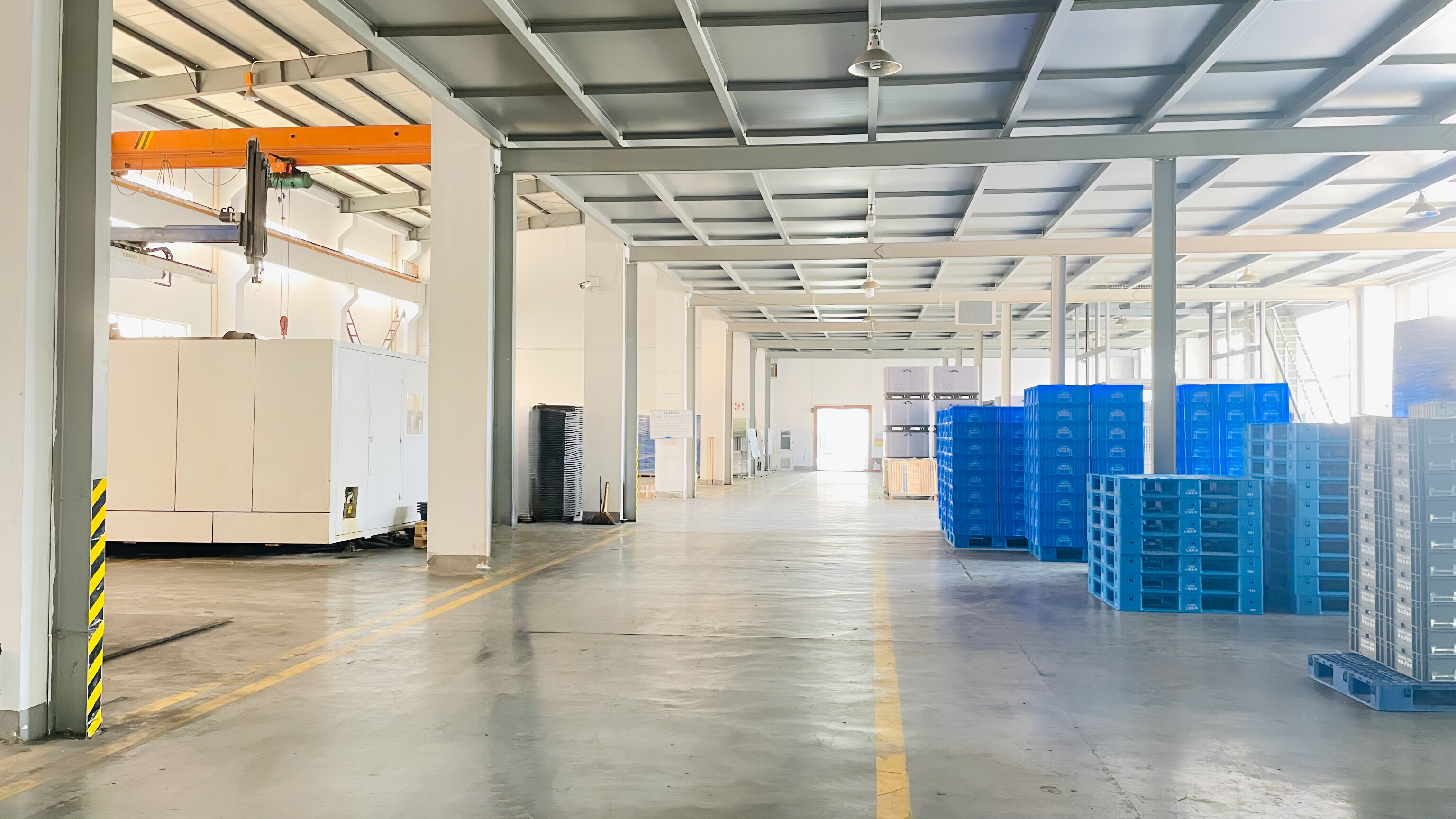
Plan the lead time around the customization rather than around the box. The 7–15 day window applies to customized orders, so a project requiring colour coding, printed logos and a non-standard size should budget that window plus freight and site acceptance testing before the first production batch arrives.
Guarantee Boundaries and the Verification Gaps
After-sales cover is stated as five years, excluding damage caused by human error or excessive storage weight. The exclusion matters more than the duration, because it makes two things commercially relevant: what the rated storage weight is, and how "excessive" is determined after an incident.
No numeric load rating appears in the supplied product records, so the practical step is to request a written load figure for the intended stack configuration — box plus contents, at the stack height and rack type the site will use — and to keep that figure with the purchase record. The same discipline applies to the base and to any inner lining: both are part of the range, and their limits should be confirmed for the specific load rather than assumed from a photograph.
Three further gaps should be closed before a chemical or wastewater project commits:
- Chemical compatibility. No per-medium resistance data is supplied. Obtain resin-level guidance for the specific medium, concentration and temperature, or run an exposure test on the sample unit.
- Liquid tightness. Enclosed construction is not a sealing specification. If the project requires containment of free liquid, confirm the fill method and any liner arrangement in writing.
- ESD performance. If the storage area is static-sensitive, request surface-resistance test data instead of relying on the word "anti-static" in an application description.
Documented field experience exists in an adjacent application: a Mexican automobile manufacturer used 1,000 pieces over three years to store transmission gearboxes, reporting standardised parts storage, reduced collision damage and improved warehouse management efficiency, with high load-bearing capacity, shock resistance and a stable structure cited as the fit for that gearbox application. That record supports structural durability in parts handling. It does not establish chemical-storage performance, and it should not be presented as if it does.
FAQ
Does a plastic pallet box need certification to store chemicals or wastewater?
The supplied specification lists the material (HDPE/PP), HS Code 3923100000 and the application media, and it does not include a chemical-storage certification. Storage requirements come from the site's jurisdiction, the medium and the containment arrangement, and are set by the operator's own risk assessment. Where a static-sensitive area is involved, ANSI/ESD S541-2019 is the packaging standard to reference. Ask the supplier for the material statement and any test documentation that assessment needs.
Can one model handle oil, alcohol, alkali, acid and wastewater?
All three models list the same application set — oil, industrial alcohol, alkali, acid, industrial wastewater, water and car parts — so the application list does not separate them. The separating variables are footprint and wall construction: 1200×800×1000 for plants on the standard 1200×800 module, 1000×800×800 where 1200 mm is too wide (in either storage pallet box or honeycomb panel construction), and the die-cast 1230×830×1000 where a larger base is required. Medium-specific compatibility still has to be confirmed per project.
What drives the cost of a customized pallet box?
No price is published in the supplied data, so cost should be quoted rather than estimated. The scope items that move it are the customization itself — non-standard dimensions, custom colour, printed logo, material choice and any inner lining — plus construction type and order quantity. The efficient route is to fix the footprint and the medium first, then request a quotation for one sample unit and a project quantity so the two can be compared directly.
Can we evaluate the box before committing to a project order?
Yes. The minimum order quantity is one unit and samples are accepted, which allows an on-site trial of fit, filling, cleaning and nesting. Customized lead time is 7–15 days, so a trial can be scheduled inside a normal evaluation window without delaying the project schedule.
How long does a customized order take, and what does the guarantee cover?
Customized orders are quoted at 7–15 days, with stated production capacity of 30,000 units per year, roughly 3,000 pieces per month. The after-sales guarantee runs five years and excludes damage from human error or excessive storage weight, so the rated load for your stack configuration should be confirmed in writing at order stage. A next practical step is to review the full product and company overview in the TOYOE product brochure, then send the medium, footprint and stack height for a sample and quotation.
Conclusion: Match the Scenario, Then Confirm the Numbers
Chemical and wastewater storage in heavy industry is a scenario-matching problem before it is a purchasing problem. The medium defines what must be verified, the footprint defines which model is physically possible, the construction defines which version of that footprint is appropriate, and the return loop defines whether the empty containers become a storage burden. Applied in that order, the choice between the 1200×800×1000, the 1000×800×800 and the die-cast 1230×830×1000 becomes a short, documented decision rather than a judgement call.
The supported strengths of the enclosed HDPE/PP pallet box range are concrete: a closed body, nestable empty-state handling, a recyclable single-material construction, customization of size, colour, logo and material, a one-unit trial order and a 7–15 day customized lead time backed by a five-year guarantee. The equally concrete limits are that no per-medium chemical-resistance data, liquid-tightness rating, numeric load rating or ESD surface-resistance value is included in the supplied specification. A project that documents both sides — the fit and the open verification items — is the one that survives an audit and a first winter in the yard.
Have Questions or Need More Details?
Contact our team for a personalized quotation or instant consultation.
Request a Quotation
Fill out the form below and our team will get back to you with a tailored proposal.
WhatsApp Direct Chat
Prefer to chat in real-time? Message us on WhatsApp for instant assistance & quick answers.
- Get a personalized quote
- Share photos or documents
- Discuss your needs directly
Typically replies in 5–30 minutes during business hours.