1200x800x1000 vs 1000x800x800 Pallet Box: Which Fits Auto Parts Storage?
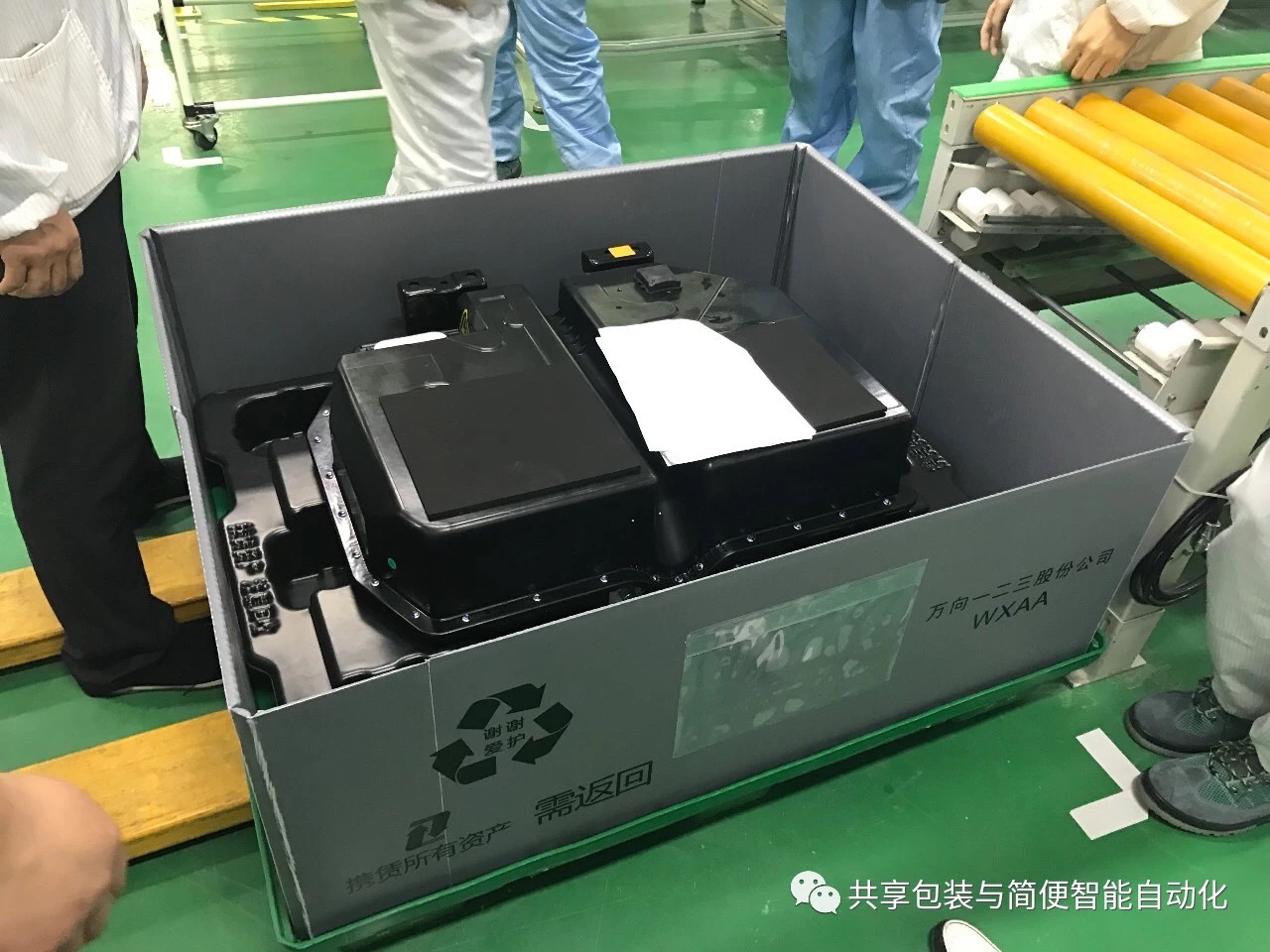
An enclosed pallet box is a rigid plastic container built on a pallet footprint, loaded and moved by forklift, and used to protect parts from contact damage, dust and moisture during storage and transport. The two models compared here - 1200x800x1000 mm and 1000x800x800 mm - are both offered by TOYOE, the brand of Zhangjiagang Fenghui Logistics Equipment Co., Ltd., a logistics packaging manufacturer founded in 2010 in Zhangjiagang, Jiangsu, China. The physical difference between the models is 200 mm of length and 200 mm of height. That difference decides what fits inside, which shelf or rack lane the box can occupy, how high it can be stacked, and how far an operator has to reach.
For automotive parts storage, the larger 1200x800x1000 box is the better fit when parts are tall, bulky or heavy, and when the storage lane, racking plan and truck deck are already built around the 1200x800 footprint. The 1000x800x800 box is the better fit when parts are compact and dense, when shelf headroom is limited, when operators need shorter reach, or when the unit load must stay light enough for manual handling at the picking face.
Decision rule: choose the 1200x800x1000 when the part envelope is tall, irregular or heavy; choose the 1000x800x800 when the part is small and dense, the shelf is low, or the box must be reached into frequently.
Problem Definition: Size Errors Appear as Damage, Not as a Specification Mistake
In automotive parts storage, a wrong box size rarely announces itself as a specification error. It shows up later as a rejected part, a wet carton, a bent casting or a blocked aisle. Three failure modes dominate: collision damage, moisture damage and overload.
Collision damage happens when parts move inside a box that is too large for the load, or when metal parts contact each other during forklift handling. TOYOE controls this with a solid box structure, shockproof packaging and load limit control, and with strict load inspection before dispatch. Moisture damage is controlled through a sealed, moisture-proof design that keeps condensation, dust and splash away from machined surfaces. Overload is a stacking decision: a box that is filled beyond its working load and stacked three high transfers that load into the bottom unit.
A gearbox housing shows the problem clearly. The part is heavy, has machined mating faces and an irregular outline. In an undersized box the housing sits above the rim, so the box cannot be stacked and the part is exposed. In a substantially oversized box the housing slides, and metal-to-metal contact during forklift handling becomes the damage source. The correct answer is a box whose internal length and height follow the part envelope closely, with an inner lining or shockproof packaging absorbing the remaining clearance.
The second consequence of a size error is operational. A 1200x800 box placed in a shelf bay planned for a 1000x800 footprint intrudes into the aisle and blocks forklift access. A 1000x800x800 box used for a tall part either cannot be closed or has to be stored single-tier, which removes the stacking capacity the storage plan assumed. Both outcomes cost more than the price gap between the two models.
Industry Background: Why Enclosed Plastic Boxes Now Carry Both Parts and Fluids
Enclosed plastic pallet boxes replaced wooden crates and steel-wire cages in automotive and industrial logistics for reasons that are mostly about repeatability. In the comparison TOYOE publishes against wooden pallets, plastic boxes are described as more durable, moisture-proof, easier to clean and more customs-friendly, with a stable load capacity and lower total cost over long-term use. The same comparison states an initial cost about 30% higher than wood, total cost about 45% lower over the long term, a service life extended by 3-5 times, and roughly 80% less maintenance work.
The same enclosed body is used for fluids as well as parts. Automotive and industrial sites store and move oil, industrial alcohol, alkali, acid, industrial wastewater and water in plastic containers, and the sealed body of an enclosed pallet box keeps splash and vapour away from the surrounding area. Material compatibility still has to be checked medium by medium: high-density polyethylene is widely used for many alkalis and many dilute acids, but concentration, temperature and contact time decide whether a specific medium is acceptable. Buyers handling aggressive media should confirm the medium with the supplier rather than assume that any plastic box is suitable.
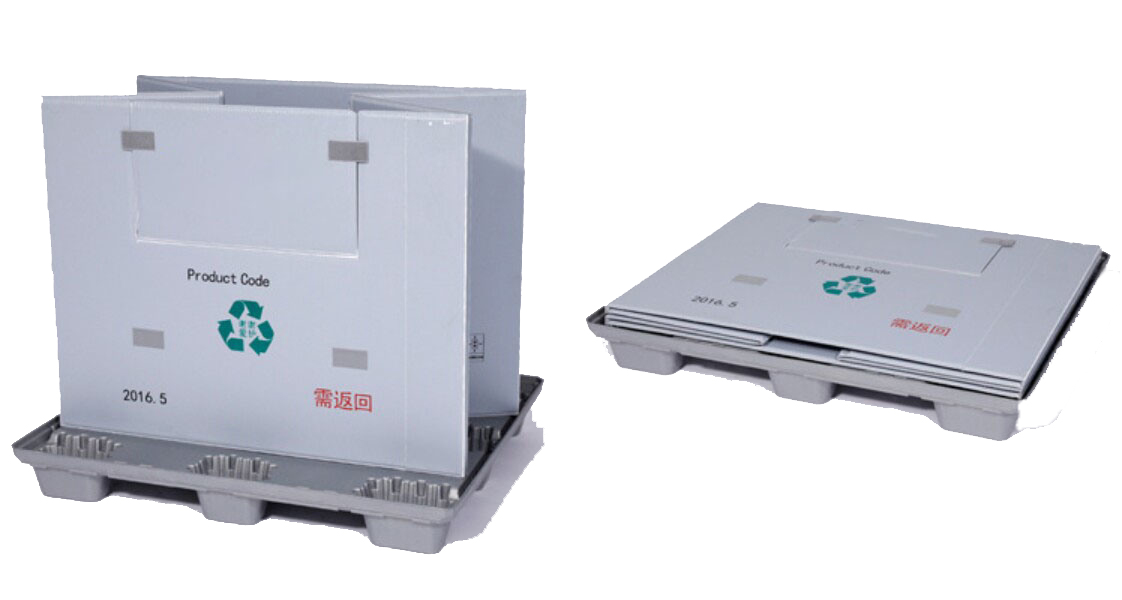
Two technical requirements increasingly drive specifications. First, electronic and static-sensitive parts require packaging that complies with ANSI/ESD S541-2019, the primary industry standard for packaging used to store, transport and protect ESD-susceptible items; conductive polymer blends for this duty are specified with surface resistance in the range of 10⁴-10¹⁰ Ω. Second, returnable logistics depends on empty-space efficiency: foldable variants in the same product family can reach a fold ratio of up to 5:1, which means five folded boxes occupy the space of one erected box and cut empty return volume substantially.
Supply is concentrated. China is the dominant exporter of plastic crates and boxes under HS 392310, with an export value of USD 2.33 billion in 2022 according to trade data reported by FreightAmigo from UN Comtrade figures. TOYOE operates inside that supply cluster: a 4,000 m² factory, a monthly production capacity of 3,000 pieces and an annual output of 30,000 units, with quality control that includes testing on 50% of products. The company exports about 40% of its output and serves markets in the EU and Southeast Asia. For a buyer planning a multi-year parts storage standard, this is the relevant background: the box is a repeat-purchase item, and the supplier's capacity and testing routine determine whether the same box arrives in year three as in year one.
Detailed Solution: What Each Model Is Built to Solve
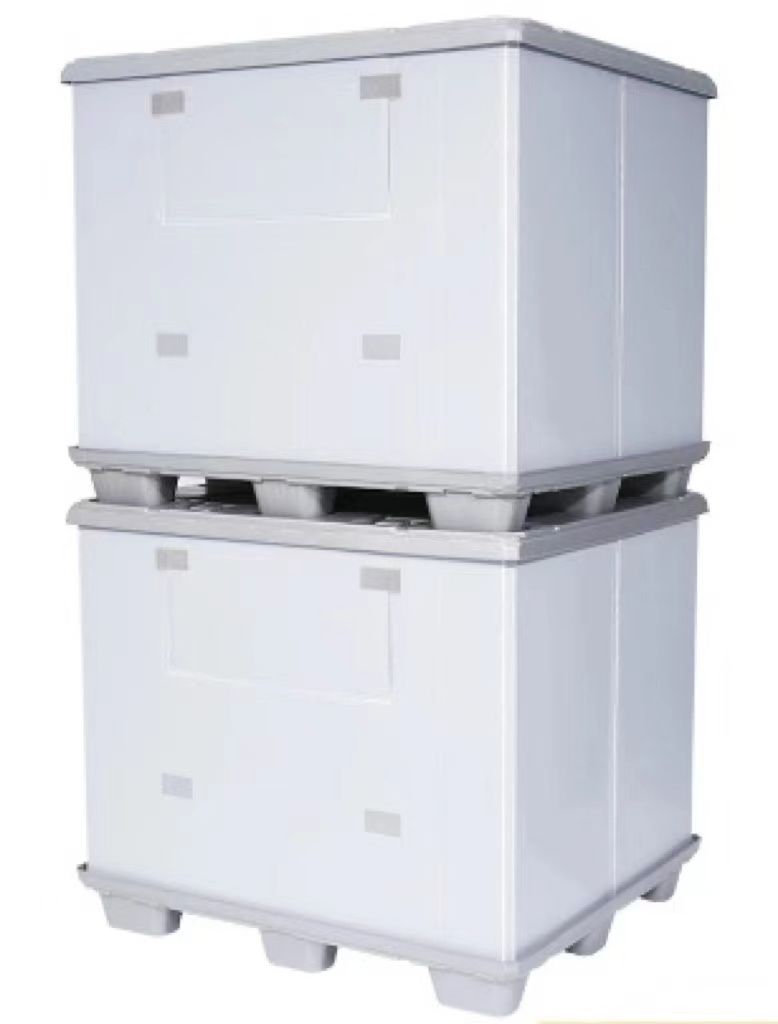
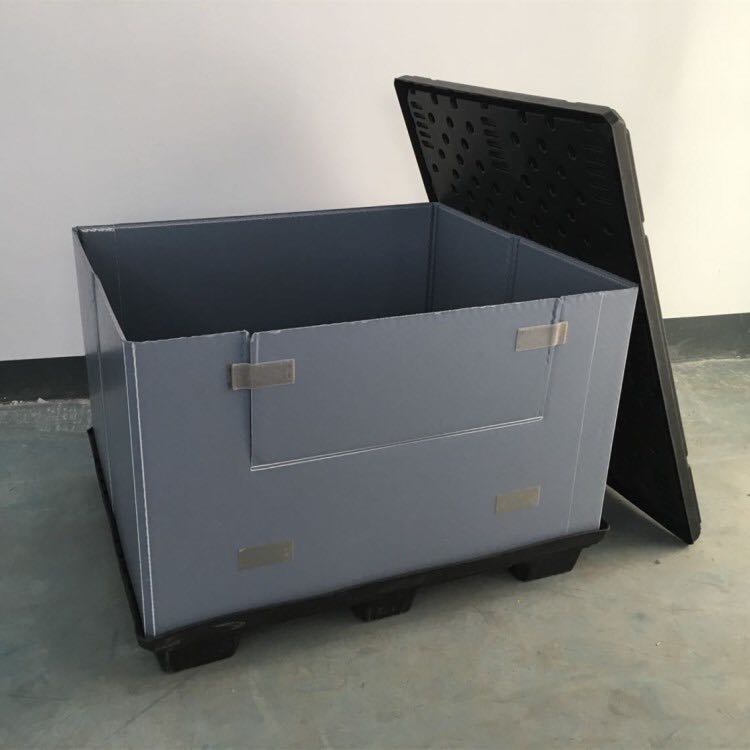
Both models are injection-moulded plastic pallet boxes in the same construction family: enclosed walls, a solid base, stackable when loaded, nestable when empty, and recyclable at end of life. They differ in the working envelope they create, and that envelope is what the buyer is actually selecting.
1200x800x1000 mm: capacity for tall and bulky automotive parts
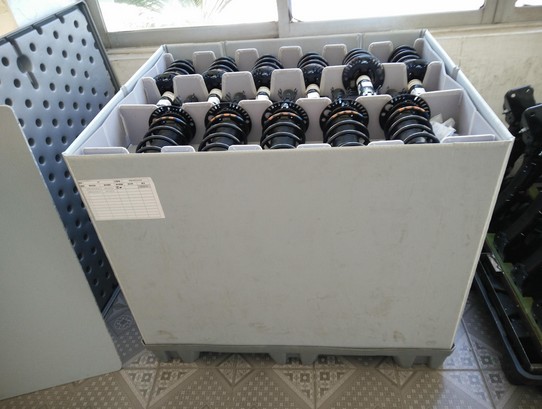
The 1200x800x1000 box sits on a 1200x800 footprint and rises to 1000 mm. The extra 200 mm of length and 200 mm of height over the smaller model allow tall assemblies, gearbox housings, large castings and coiled or hose assemblies to sit below the rim instead of above it. Sitting below the rim matters because a box can only be stacked when its contents do not interfere with the unit above.
On the storage side, the 1200x800 footprint follows the pallet lane that most warehouses, truck decks and conveyor layouts are already planned around, so the box can usually be dropped into an existing position without redesigning the rack bay. The trade-off is weight and cube: a loaded 1200x800x1000 unit is heavier and occupies more volumetric space per position, so it belongs on lower stack tiers or on racking rated for the loaded mass.
1000x800x800 mm: density and access for compact parts
The 1000x800x800 box uses the same 800 mm width but shortens the length to 1000 mm and the height to 800 mm. It stores bearings, fasteners, small castings, brackets, seals and electronic modules at higher density per shelf position, and it is easier to reach into because the working depth and height are both reduced. For a picking face where operators lift parts in and out of the box many times per shift, the lower rim reduces the reach and the load that has to be raised over the side.
The same reduction limits the model. A part taller than the 800 mm wall cannot be enclosed, and a long casting may need to be loaded at an angle that wastes volume. The 1000x800x800 box also does not align with a 1200x800 pallet lane, so it suits narrower shelf bays, dedicated small-parts lines or mixed storage areas rather than the main pallet highway.
Options shared by both models
Because the two sizes come from one construction family, the specification options do not change with size. Buyers can specify size, colour and logo, and can add a customized inner lining to divide the internal space, hold a part in position or absorb clearance around an irregular casting. Anti-static material is available for static-sensitive parts, with ESD performance referenced to ANSI/ESD S541-2019 and surface resistance in the 10⁴-10¹⁰ Ω range for conductive blends. Antiflaming and heavy-duty variants exist in the wider range, and dust-proof and sealed designs support clean, moisture-sensitive parts. When empty, boxes nest to recover floor space; foldable variants in the range can reach a fold ratio of up to 5:1 for return transport.
Step-by-Step Breakdown: How to Choose Between the Two Sizes
- Measure the part envelope, not the part weight. Record length, width and height including any packaging or inner lining. If the height exceeds the usable height of an 800 mm wall, the 1200x800x1000 model is the realistic starting point; if the part is compact, the 1000x800x800 model can improve density per shelf position.
- Map the storage lane. Confirm whether racking, truck decks and staging areas are laid out on a 1200x800 pallet footprint or on narrower shelf bays. A box that does not match the lane either blocks the aisle or leaves unusable space.
- Check stacking and forklift access. Decide the number of tiers, the loaded mass per unit and the forklift turning clearance in the aisle. Stacking is only valid when contents stay below the rim and every unit in the stack is within its working load, which is why TOYOE performs strict load inspection and supplies a solid box structure rather than a flexible wall.
- Decide the medium and the environment. Parts exposed to oil, industrial alcohol, alkali, acid, industrial wastewater or water need a sealed, moisture-proof body and confirmed material compatibility. Static-sensitive electronics need an anti-static specification referenced to ANSI/ESD S541-2019.
- Specify customization early. Size, colour, logo and inner lining all affect tooling and the sample that will be approved. Agreeing these details before sampling avoids a second approval cycle.
- Validate with a sample, then agree the commercial terms. TOYOE runs sample testing before mass production and supplies raw material test reports for confirmation; quality control also includes testing on 50% of products. Minimum order quantity is 1 unit, lead time is 7-15 days, and the after-sales guarantee runs for 5 years. Delivery terms are FOB or CIF, with 30% deposit in advance and 70% balance before shipment.
Use Cases: Where the Choice Between the Two Models Is Made
Gearbox and transmission housings: the collision-damage case
A gearbox storage application is the clearest test of the size decision. Housings are heavy, have machined mating faces and cannot be stacked on one another without protection. In a retrofit of an automotive gearbox line, the storage requirement was to hold each housing clear of the sidewalls, keep it below the rim so the box could be stacked, and prevent metal-to-metal contact during forklift handling. The 1200x800x1000 model provided the height and length needed for the housing envelope, while a customized inner lining held the casting in position and removed the clearance that allows movement. Smaller sub-components from the same line - bearings, bolts, small covers - moved into the 1000x800x800 model, where the lower rim made picking faster and the smaller footprint freed shelf bays.
The lesson from the case is not that one size is better. It is that collision damage is controlled by matching the box envelope to the part, adding shockproof packaging and an inner lining, and enforcing a load limit so that stacked units do not transfer force into the part below.
Fluids: oil, industrial alcohol, alkali, acid, industrial wastewater and water
Fluid handling favours the larger 1200x800x1000 model when batch volume matters, and the smaller 1000x800x800 model when the container has to be lifted, decanted or inspected frequently. In both cases the requirement is the same: a sealed body, a solid base and a material confirmed against the specific medium. Media such as oil, industrial alcohol, alkali, acid, industrial wastewater and water do not behave identically in contact with plastics, and concentration, temperature and residence time must be confirmed before a box is dedicated to a medium.
Small and dense parts at the picking face
Fasteners, seals, bearings and small castings are picked in volume. Here the 1000x800x800 model usually wins on ergonomics and shelf density, while the 1200x800x1000 model is reserved for bulk replenishment behind the picking face. Splitting the two roles across one storage plan is a common way to keep the aisle clear and still hold enough stock per position.
Static-sensitive electronics and returnable loops
Control modules and electronic assemblies need an anti-static specification rather than a standard box, and ANSI/ESD S541-2019 is the reference to quote. In returnable loops, the decision shifts again: the box that travels back empty most often should be the one with the best nesting or folding performance, because empty return volume is the cost that repeats every cycle.
Comparison Table: 1200x800x1000 vs 1000x800x800
| Decision factor | 1200x800x1000 pallet box | 1000x800x800 pallet box |
|---|---|---|
| Footprint | 1200x800 mm, aligned with 1200x800 pallet lanes and racking plans | 1000x800 mm, narrower footprint for tighter shelf bays |
| Height / wall | 1000 mm, encloses tall assemblies and housings | 800 mm, shorter reach and lower stack height |
| Usable capacity | 100-200 L band, confirmed per configuration | 100-200 L band, confirmed per configuration |
| Typical parts | Gearbox housings, large castings, hose assemblies, bulk fluid batches | Bearings, fasteners, brackets, seals, small castings, control modules |
| Stacking | Stackable when loaded, subject to strict load inspection and working load | Stackable when loaded, with lower practical stack height |
| Forklift handling | Forklift handled; longer side needs aisle turning clearance | Forklift handled; suits narrower aisles and shelf access |
| Fluid media | Oil, industrial alcohol, alkali, acid, industrial wastewater, water, with medium confirmed | Same media, better suited to frequent decanting and inspection |
| Anti-static option | Available, referenced to ANSI/ESD S541-2019 | Available, referenced to ANSI/ESD S541-2019 |
| Customization | Size, colour, logo, customized inner lining | Size, colour, logo, customized inner lining |
| MOQ | 1 unit | 1 unit |
| Lead time | 7-15 days | 7-15 days |
| After-sales | 5-year guarantee | 5-year guarantee |
| Best fit | Main parts lanes, tall or heavy parts, larger fluid batches | Dense small parts, low shelves, frequent manual picking |
FAQ
Are these boxes suitable for oil, industrial alcohol, alkali, acid and industrial wastewater?
The enclosed body is sealed and moisture-proof, and it is used for oil, industrial alcohol, alkali, acid, industrial wastewater, water and car parts. Compatibility is medium-specific: high-density polyethylene suits many alkalis and many dilute acids, but concentration, temperature and contact time must be confirmed with the supplier before a box is dedicated to a medium. For static-sensitive contents, ask for the anti-static specification referenced to ANSI/ESD S541-2019, where conductive polymer blends are specified with surface resistance of 10⁴-10¹⁰ Ω.
Can the box be customized to a specific automotive part?
Yes. Size, colour, logo and a customized inner lining can all be specified. The inner lining is the part that usually matters most, because it divides the internal space, holds the part in position and absorbs clearance around irregular castings so the part does not move during forklift handling. Minimum order quantity is 1 unit, so a single custom box can be ordered as a trial before a line-wide standard is set.
Which model costs less over a multi-year storage cycle?
Purchase price is only one factor. The 1200x800x1000 model carries more per trip and fits existing 1200x800 lanes, but it consumes more shelf and transport cube per position. The 1000x800x800 model improves cube utilization for compact parts and shortens operator reach, which matters at a high-frequency picking face. On material economics, TOYOE's comparison with wooden pallets reports an initial cost about 30% higher, total cost about 45% lower over the long term, a service life extended by 3-5 times and roughly 80% less maintenance work. A realistic evaluation should compare cost per stored part per year, not cost per box.
How can a buyer validate the box before committing to a volume order?
Sample testing is carried out before mass production, and test reports for the raw materials are provided for confirmation. Quality control also includes testing on 50% of products, which gives the sample a traceable production context rather than a hand-built exception. With a minimum order quantity of 1 unit, the validation route is straightforward: order the size and lining you intend to standardize on, load it with the real part, and test stacking and forklift handling on site.
What are the lead time, payment terms and after-sales terms?
Lead time is 7-15 days. Production capacity is 3,000 pieces per month, with an annual output of 30,000 units from a 4,000 m² factory, and the after-sales guarantee runs for 5 years. Delivery terms are FOB or CIF, with 30% deposit in advance and 70% balance before shipment. To move from comparison to a decision, request a sample or a quotation for the specific size, colour, logo and inner lining you need - the sales team can confirm the configuration and the delivery schedule against your part envelope.
Conclusion: Match the Box to the Part and the Lane
The 1200x800x1000 and 1000x800x800 pallet boxes are not competing products; they are two working envelopes from the same construction family. The larger model earns its place where parts are tall, bulky or heavy, where a 1200x800 pallet lane already exists, and where fluid batch volume matters. The smaller model earns its place where parts are compact and dense, where shelf headroom is limited, and where operators reach into the box many times per shift. The gearbox housing case shows the logic in practice: the housing went into the taller box with a customized inner lining and shockproof protection, while bearings and small covers went into the shorter box at the picking face.
For buyers standardizing across a plant, the durable route is to decide on the part envelope and the storage lane first, then confirm customization, sample approval, MOQ of 1 unit, 7-15 day lead time and the 5-year after-sales guarantee. That sequence produces a standard that still works when the second order arrives, which is the point of a long-term supply relationship rather than a one-off purchase.
Next step: sample, quotation or full catalogue
Send the part envelope and your storage layout, and TOYOE will confirm whether the 1200x800x1000 or the 1000x800x800 pallet box fits, together with size, colour, logo and inner lining options.
Email: zjgfh@zjgfenghui.cn | Tel: 86-15370396661 | WhatsApp: 86-19901499028
Website: www.toyoebox.com
Download the product brochure: TOYOE pallet box catalogue (PDF)
Have Questions or Need More Details?
Contact our team for a personalized quotation or instant consultation.
Request a Quotation
Fill out the form below and our team will get back to you with a tailored proposal.
WhatsApp Direct Chat
Prefer to chat in real-time? Message us on WhatsApp for instant assistance & quick answers.
- Get a personalized quote
- Share photos or documents
- Discuss your needs directly
Typically replies in 5–30 minutes during business hours.