Pallet Box Selection by Working Condition: A Project Guide for Automotive Warehouses
A pallet box specification becomes useful only when it is matched to the project that will use it. For automotive logistics teams, the question is not only which pallet box is available; it is which pallet box can handle this warehouse environment and this type of part. This guide explains how to move from project conditions to pallet box requirements, and it uses the TOYOE range manufactured by Zhangjiagang Fenghui Logistics Equipment Co., Ltd. as a reference.
TOYOE is an industrial plastic packaging brand produced by Zhangjiagang Fenghui Logistics Equipment Co., Ltd. in Zhangjiagang, Suzhou, Jiangsu, China. The manufacturer has produced plastic pallet boxes, storage boxes, plastic crates and honeycomb panel boxes since June 2010. Approximately 40 percent of its output is exported, with Mexico and the United States named as the main destinations.
What is pallet box project adaptation?
Project adaptation starts from the application description rather than from a catalogue. In the relevant TOYOE application record, the scenario is a logistics warehousing and packaging project in Mexico. The stated working conditions include high humidity, dust, a wide temperature range, waterproof and anti-static requirements. The function is automotive parts storage, standardized stacking and transportation protection, with operation expected around the clock.
That makes the selection problem more specific than asking for the lowest priced box. The pallet box must resist moisture, protect parts from dust, remain stable under stacking, work with forklift and warehouse-shelf handling, and fit the size of the parts being stored. In this scenario, the parts are components that can be damaged by collision, such as transmission gearboxes.
Industry background: plastic pallet boxes in automotive logistics
Grand View Research projects that the global plastic pallets and pallet box market will approach approximately USD 11.2 billion by 2030, driven by logistics users shifting from wooden solutions to durable plastic alternatives. Global Market Insights forecasts that plastic honeycomb board packaging will grow at a compound annual rate of 5.9 percent through 2032, largely because honeycomb board offers strength without excessive weight for automotive parts transport. Straits Research estimates that the Asia-Pacific region accounted for more than 32 percent of global plastic pallet revenue in 2023, with China contributing significant production capacity.
Mordor Intelligence lists ORBIS Corporation, Schoeller Allibert, Brambles (CHEP) and Loscam among major manufacturers in the plastic pallet sector. These names show that the market is well established. For a project buyer, however, selection should be based on the actual environment, load, dimensions and production record, not only on brand size.
What a TOYOE pallet box solution contains for this scenario
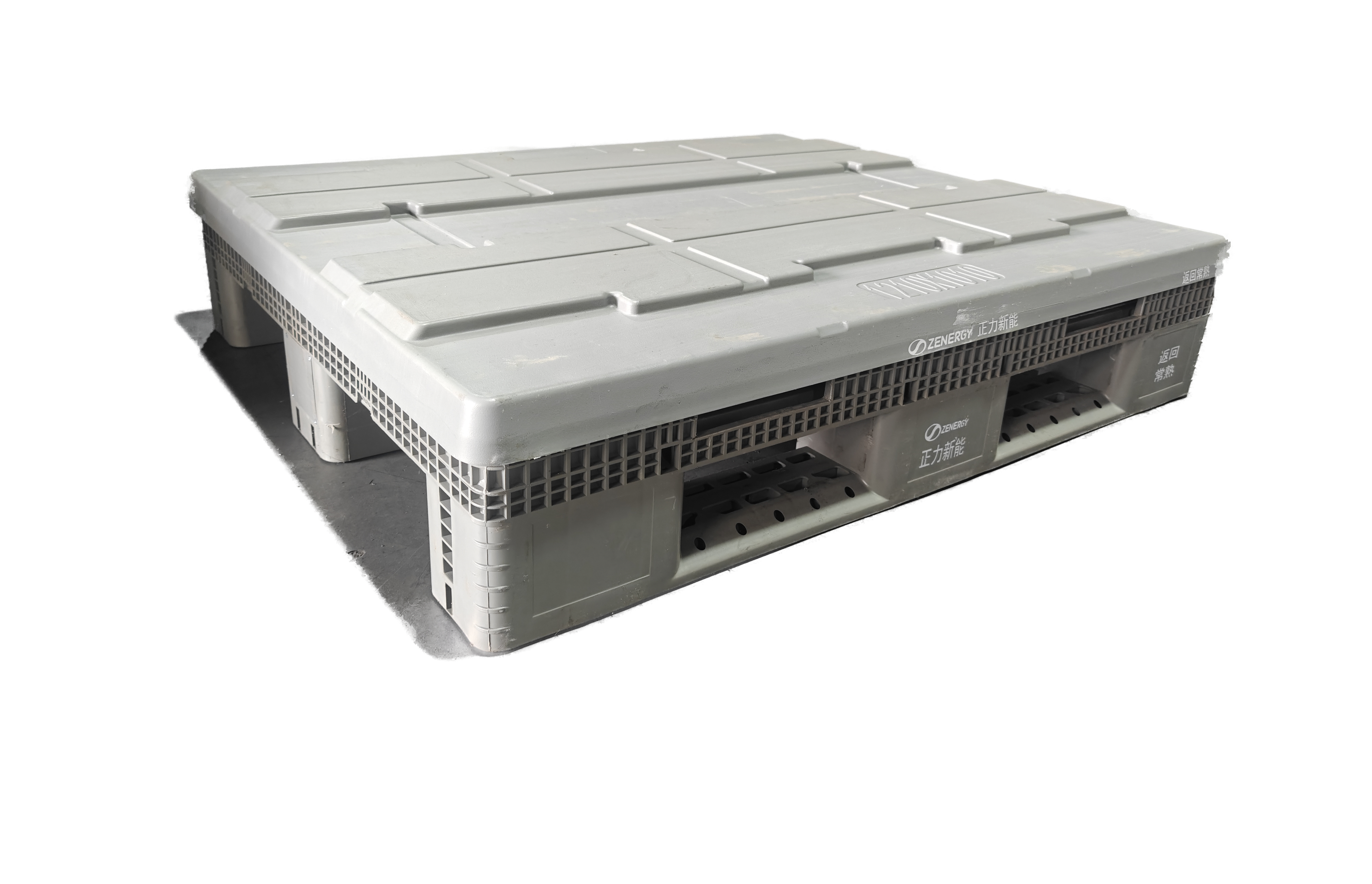
TOYOE documentation for this project type covers plastic pallet boxes with HDPE/PP material, enclosed product types, multiple specifications and an accepted custom order policy. Related catalogue models include a 1000*800*800 Storage Pallet Box, a 1000*800*800 Plastic Honeycomb Panel Box, a 1200*800*1000 Plastic Pallet Box and a 1230*830*1000 die-cast pallet box series for automotive engines and transmission components.
The Plastic Honeycomb Panel Box is a blow-molded honeycomb board construction. This construction is relevant because automotive parts transport often requires a strong but reasonably lightweight outer shell. The 1200*800*1000 pallet box is a large-format option, while the die-cast box series is linked to high-load-bearing assembly handling in the supplier records.
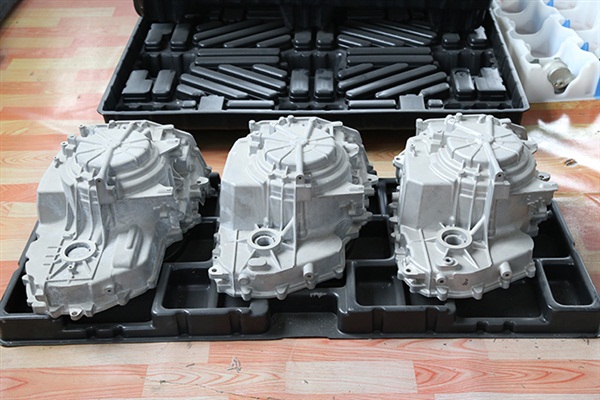
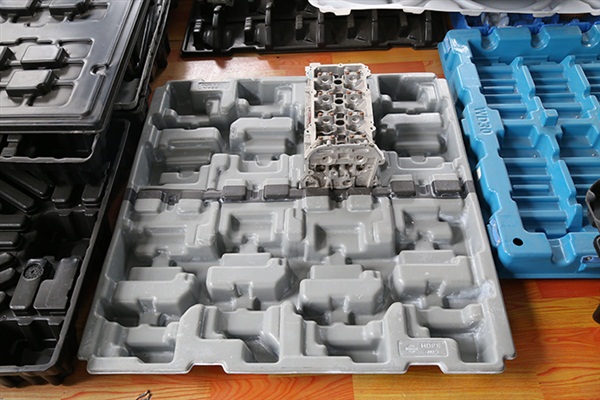
Because the box can be configured around the project, the buyer should define not only the outer dimensions but also the inner protection. The supplier records include heavy-duty vacuum-formed inner lining trays and anti-static blister trays. For gearbox or similar components, an inner lining can reduce contact damage and keep the part fixed during handling.
Case: 1,000 pallet boxes for car transmission gearboxes in Mexico
The application case centers on an automobile manufacturer in Mexico. The manufacturer stored car transmission gearboxes in pallet boxes. The reported highlights are high load-bearing capacity, shock resistance, stable structure, and dimensions that fit the transmission gearbox. The project result after three years was standardized storage of automotive parts, no collision damage to the gearboxes, and improved warehouse management efficiency.
For engineers at the research or evaluation stage, this case supplies a practical reference: the pallet box choice was based on part weight, impact risk and warehouse layout, not on container volume alone.
Step-by-step: build a project-level pallet box specification
Step 1: define the environment
Start with temperature, humidity, dust, water exposure and electrostatic discharge requirements. The TOYOE Mexico scenario includes high humidity, dust, a wide temperature range, waterproof conditions and anti-static conditions. These inputs should be written into the request for quotation so the supplier matches material and structure to the real environment.
Step 2: define the part and its protection target
A transmission gearbox is heavy and can be damaged if it moves inside the container. The buyer should specify part weight, dimensions, orientation and contact points. A vacuum-formed inner lining tray may be needed to stabilize the part. The Mexico case shows why shock resistance and a stable structure matter for this type of part.
Step 3: match footprint to forklift and racking
For warehouse operations, the pallet box must suit the rack opening, aisle width and forklift type. Relevant model sizes in the TOYOE records include 1000*800*800 and 1200*800*1000 pallet box formats. If the project uses a different pallet footprint, custom sizes should be requested and confirmed before production.
Step 4: check load-bearing and stacking conditions
Standardized stacking is part of the recorded application. The buyer should compare the weight per box with the supplier load guidance and the number of boxes planned per stack. The gearbox case shows that the structural requirement was high load-bearing capacity with stable stacking performance.
Step 5: choose lining, covers and optional accessories
For irregular or sensitive automotive parts, inner protection is often more important than extra container volume. TOYOE product documentation includes heavy-duty vacuum-formed inner lining trays, as well as anti-static blister trays for static-sensitive material handling. If a project requires ESD pallet box behavior, the electrostatic requirements should be stated clearly in the RFQ.
Step 6: review return logistics and empty storage
If empty pallet boxes must be returned to a parts supplier, storage space for empties becomes part of the evaluation. The documentation set includes folded pallet box and sleeve folding pallet box designs, which are relevant when the project needs to reduce the space of empty containers.
Step 7: validate supplier capability
After the technical design is clear, review production and commercial risk. The TOYOE supplier profile lists OEM/ODM capability, monthly production of about 3,000 pieces, a documented lead time of seven to fifteen days, and a minimum order quantity of one unit. Quality control is described as 50 percent testing, and the after-sales guarantee is five years excluding damage caused by human error or storage above the load limit.
Use cases for this pallet box selection approach
- High-humidity logistics warehouses where wooden boxes can absorb moisture and plastic pallet boxes are easier to keep clean.
- Automotive transmission gearbox storage where impact protection and dimensional fit are critical.
- Heavy-load applications such as die-cast engine parts, requiring high-load-bearing pallet boxes with strong side walls.
- Dust-exposed production environments where an enclosed pallet box helps reduce contamination risk.
- Returnable packaging projects where foldable or demountable pallet boxes reduce empty-return volume.
Comparison: project condition versus pallet box evidence
The table below compares typical project conditions with the selection questions a buyer should ask and the evidence visible in TOYOE product and project records.
| Project condition | Selection question for the supplier | Evidence visible in TOYOE records |
|---|---|---|
| High humidity and waterproof requirement | Is the plastic body suitable for prolonged moisture exposure? | Product parameters mention HDPE/PP; the recorded application environment is waterproof with high humidity. |
| Dust in a 24/7 warehouse | Does the enclosed box protect parts from dust? | Product type is listed as enclosed; the application condition includes dust. |
| Anti-static or ESD-sensitive parts | Which materials and liners are specified for static control? | The scenario level describes a box designed for waterproof and anti-static environments; anti-static blister trays appear in related documentation. |
| Heavy gearbox or engine components | What is the load capacity and stacking limit? | Case record uses high-load-bearing capacity, shock resistance and stable structure for transmission storage. |
| Irregular part shapes | Can size and internal lining be modified? | Custom sizes are accepted; vacuum-formed inner lining trays are documented; the case mentions a precise gearbox fit. |
| Forklift and shelf handling | Does the footprint match racking and lifting equipment? | Related models include 1000*800*800 and 1200*800*1000 formats; the application includes forklift and warehouse shelves. |
| Empty return transport | Can the container be folded or demounted? | The documentation set includes folded and sleeve folding pallet box designs. |
Frequently asked questions
Is a pallet box suitable for a warehouse project with waterproof and anti-static requirements?
Yes, according to the TOYOE application description, the pallet box is suited to logistics warehousing and packaging projects and is designed for waterproof and anti-static environments. The recorded project conditions include high humidity, dust and a wide temperature range. Related product parameters list HDPE or PP material and an enclosed product type, so the material family fits this type of exposure. Final approval should still be based on actual plant conditions and any requested test results.
What pallet box features are important when storing car transmission gearboxes?
For transmission gearbox storage, the relevant evidence is a documented Mexico case. The project used 1,000 pallet boxes, with high load-bearing capacity, shock resistance, stable structure and dimensions fitted to the transmission gearbox. The record says the project achieved standardized storage and avoided collision damage over three years.
Can pallet box size and material be customized for a project?
Yes. TOYOE works in OEM/ODM mode. Dimension, logo, color and material can be customized, and custom order acceptance is listed in the product parameters. The MOQ is one unit, so a project team can pilot a single customized box before scaling up.
What is the sample policy, MOQ and lead time for custom pallet boxes?
Product parameters state that sample orders are accepted. MOQ is one unit, and documented lead time is seven to fifteen days. Monthly production capacity is about 3,000 pieces. For a large project, confirm the production schedule before the final purchase order.
What after-sales terms are offered?
The supplier profile includes quality control through 50 percent testing and a five-year guarantee. The guarantee excludes damage caused by human error or excessive storage weight, so the project must not exceed the rated load. Discuss the exact inspection items and stacking load with the factory before delivery.
Conclusion
Pallet box choices for project use are most reliable when they start with working conditions, part characteristics and material handling constraints. In the Mexico-based automotive record, the solution was not a generic universal bin but a 1,000-box configuration that fit transmission gearboxes, handled standardized stacking, and kept parts protected. Use the same method in your project: define the environment, specify load and dimensions, request a sample, and then evaluate the supplier against a documented project record.
Next step for pallet box project teams
Send the part dimensions, operating environment and racking details to TOYOE / Zhangjiagang Fenghui Logistics Equipment Co., Ltd. for a project review. The team can discuss sample arrangements, custom sizes, OEM/ODM requirements and lead time.
Contact Jack Zha by email at zjgfh@zjgfenghui.cn or by WhatsApp at +86 19901499028. Visit the official website at www.toyoebox.com.
Download the company brochure for catalogue and product information.
Have Questions or Need More Details?
Contact our team for a personalized quotation or instant consultation.
Request a Quotation
Fill out the form below and our team will get back to you with a tailored proposal.
WhatsApp Direct Chat
Prefer to chat in real-time? Message us on WhatsApp for instant assistance & quick answers.
- Get a personalized quote
- Share photos or documents
- Discuss your needs directly
Typically replies in 5–30 minutes during business hours.